The Work
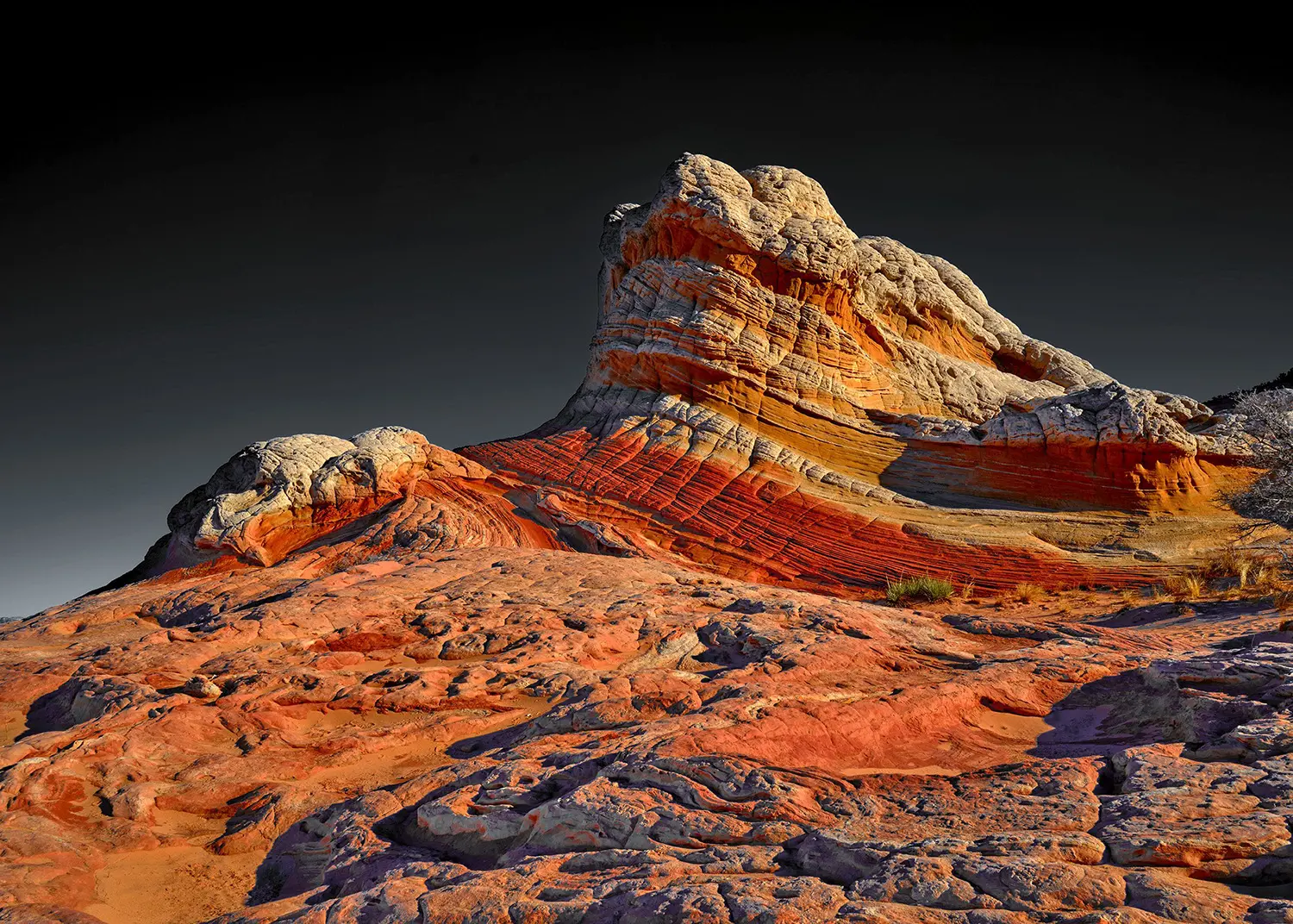
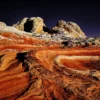
White Pocket in December catches a different kind of light than the travel-photography version of the place.
By mid-morning the sun is low enough in the southern sky to come in at an angle, and the ridges in the sandstone cast shadows across themselves — the swirls read as relief, not just colour. The sky that day had enough cloud to move without blocking the sun: the kind of sky that gives you five good minutes between shadows and five more when the rock goes flat. I worked the formation for most of the morning waiting for the two things to line up — direct light on the ridge tops, dark cloud behind.
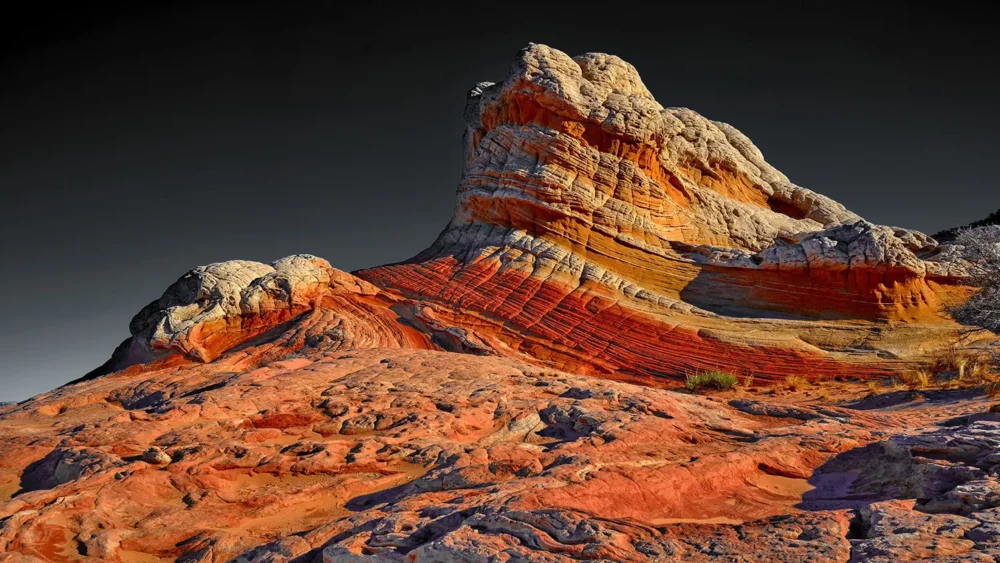
The reds in this image are the actual colour of iron-oxidized Navajo sandstone in direct December sunlight. The ochres are where the iron content drops. The pale creams are volcanic ash layers. The camera records what was there.
The Location
White Pocket sits in the western half of Vermilion Cliffs National Monument, on the Arizona–Utah border. The surface is cross-bedded Navajo sandstone — wind-laid Jurassic dunes from roughly 190 million years ago, lithified, exposed, and weathered into the layered swirls visible today. Each line in the image is a record of a specific wind direction on a single ancient afternoon. The fluid quality is not metaphor; the rock holds the form the wind gave it.
Access requires a 4×4 vehicle equipped for deep sand driving — not a standard SUV, but a purpose-prepared truck. The road is impassable after rain. Most visitors who attempt it turn back. The formation is uncrowded by design.
The Edition
Studio Edition. Edition of 25, hand-signed and numbered. Each acquisition is accompanied by a Certificate of Authenticity with hologram provenance seal. Edition 25 of 25 available.
The Capture
System: Fujifilm GFX medium format
Lens: 45–100mm
Date/Time: December 2023, morning
GPS Region: White Pocket, Vermilion Cliffs National Monument, Arizona
The Print
The colour range in this image — deep iron-red through ochre through cream — spans the full warm half of the visible spectrum, and holding those transitions without the reds going orange or the creams going yellow requires precise colour management at the print stage. On Hahnemühle Photo Rag 308gsm, the mineral palette holds to the original GFX capture; the warm colours are warm without being hot.
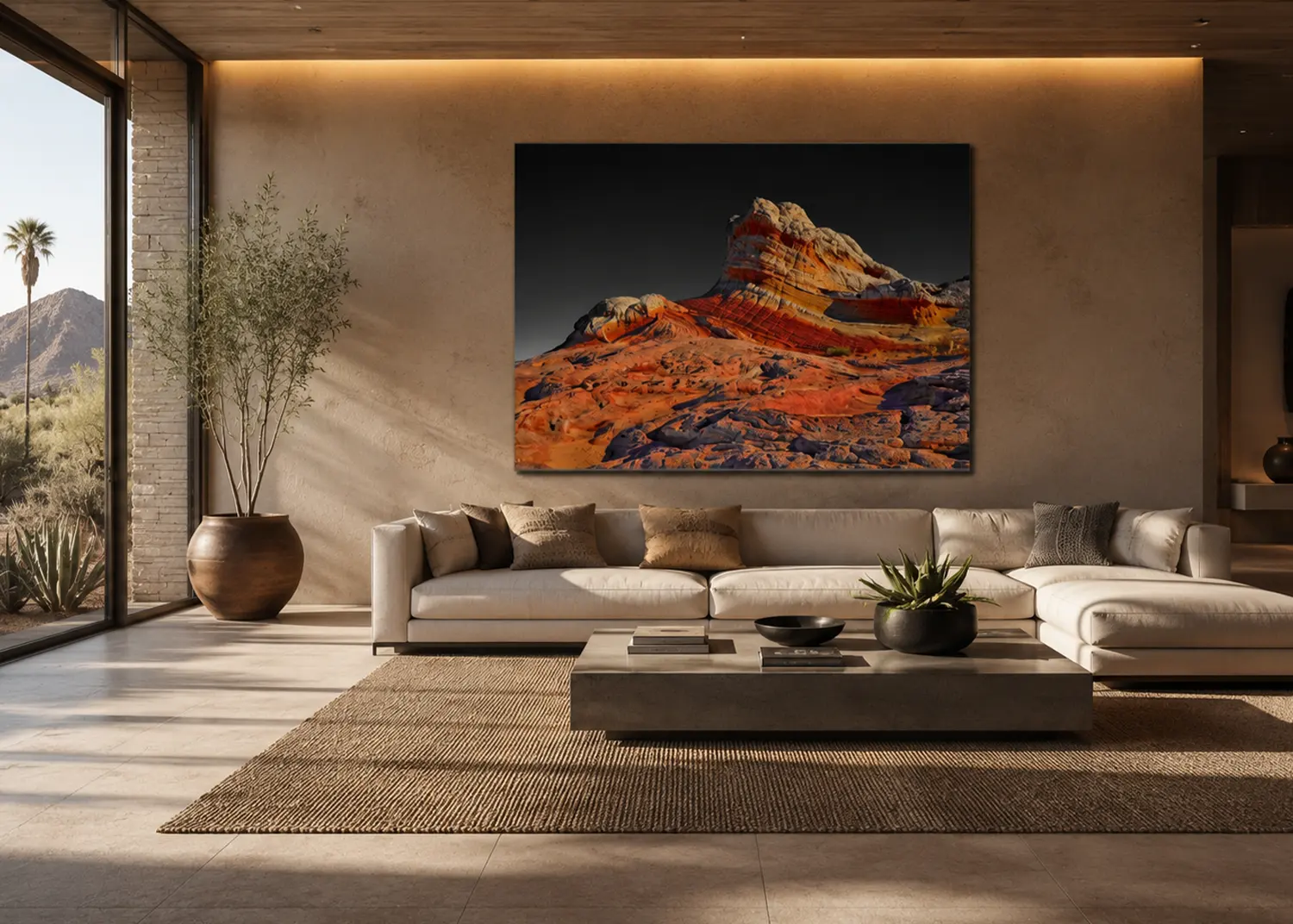
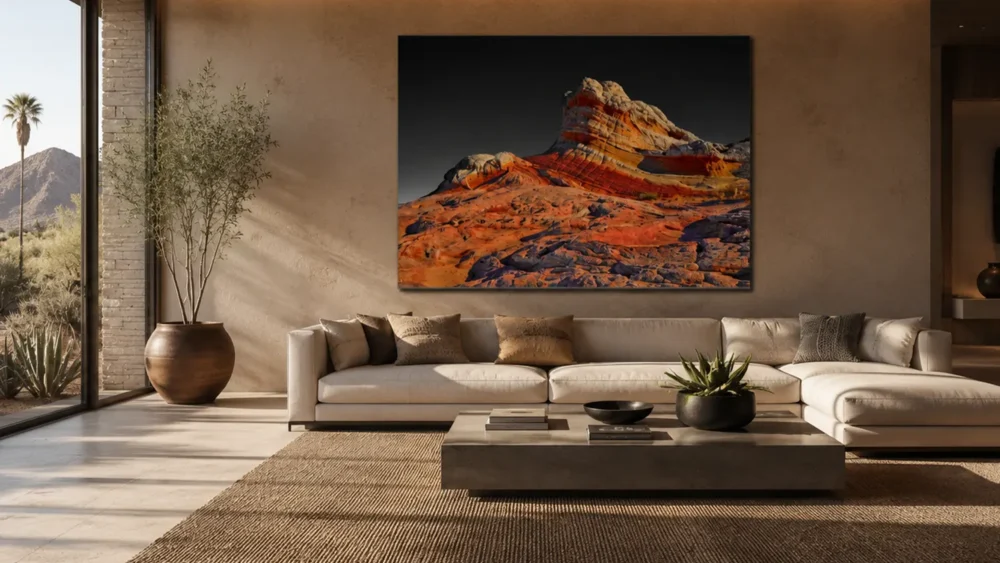
The brooding sky above the formation prints to a cool blue-grey that anchors the warm rock below. The contrast between the two is the structural argument of the composition. For interior placement, this image performs best against warm neutral walls — cream, linen, taupe — where the sky reads as the coolest element in the room rather than competing with a cool wall behind it. Minimum recommended: 30×45″. At 40×60″, the individual swirl ridges become legible as textured relief.