The Work
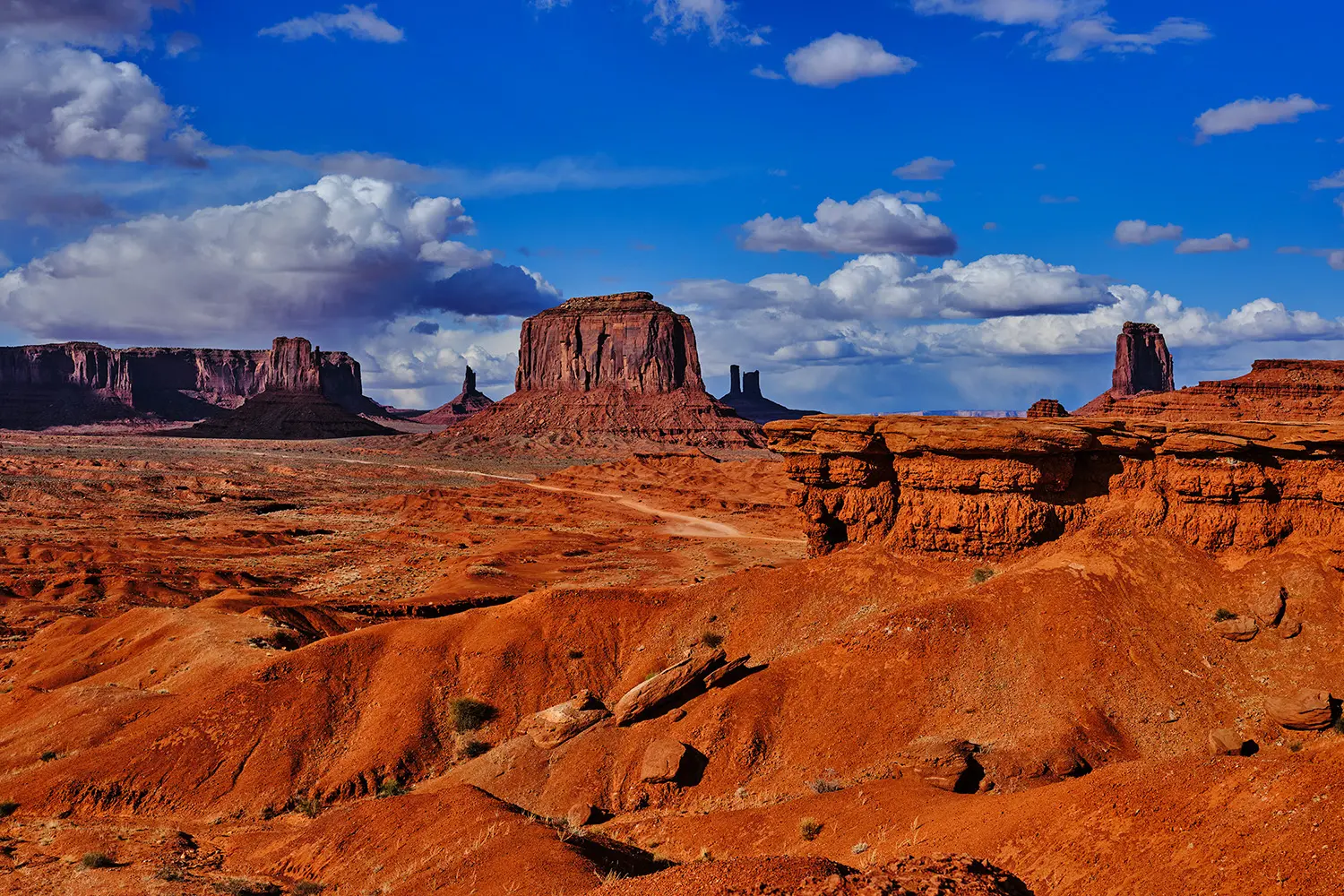
Monument Valley has been in more films than most actors. John Ford shot nine pictures here. More recently it appeared in Forrest Gump, Back to the Future III, and The Lone Ranger. By now the West Mitten, the East Mitten, and Merrick Butte have been photographed from roughly the same angle by roughly the same camera position so many times that the image is more icon than landscape.
I am not competing with that icon. I am working beside it.
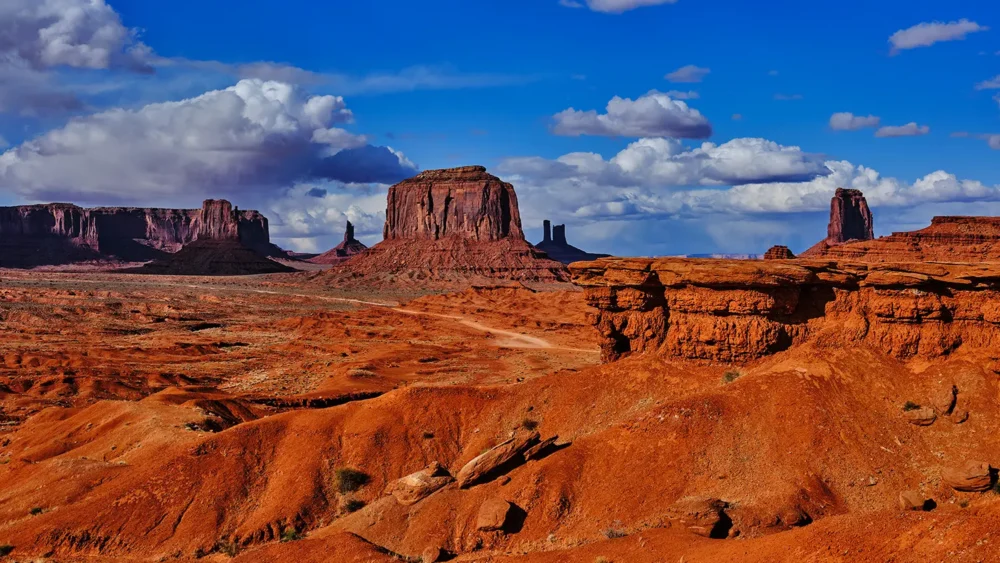
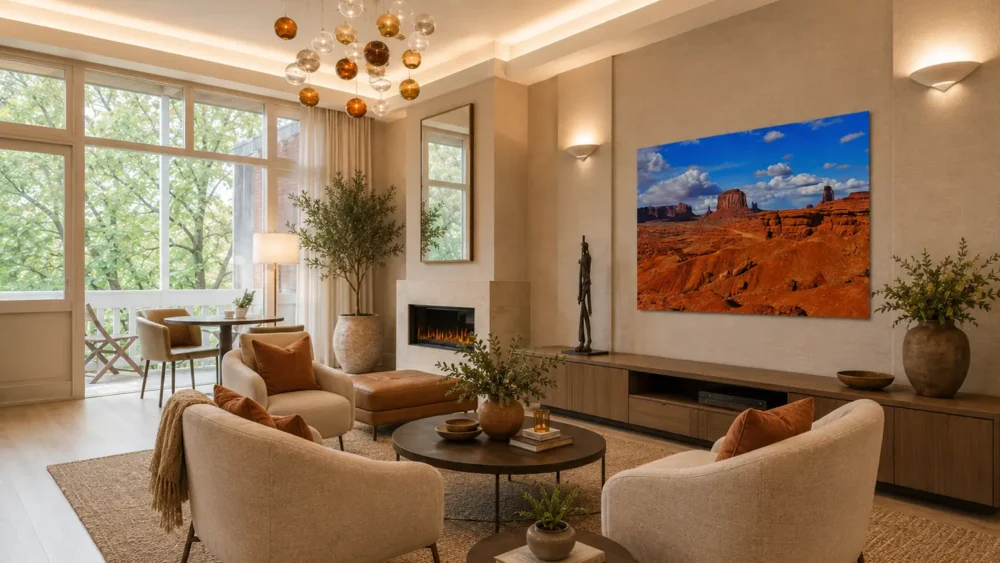
What I came for was the sky. In March the Colorado Plateau gets weather — fronts moving through, building cumulus, the kind of clouds that are lit from below in the late afternoon and throw moving shadow across the desert floor. The buttes were there, as they always are. But the sky that afternoon was doing something the standard view doesn’t wait for. I set the 45-100mm at [focal length TBC] and let the foreground red earth have the bottom third. The clouds took the top half. The buttes sat between them and held both halves of the frame together.
The image is about what happens between the earth and the sky on a specific afternoon in Monument Valley in March 2024. That part has not been in any film.
The Location
Monument Valley Navajo Tribal Park straddles the Arizona-Utah border within the Navajo Nation. The park is administered by the Navajo Nation and charges an entrance fee; photography within the valley is subject to tribal park regulations. The iconic formations — the West and East Mittens, Merrick Butte, the Totem Pole — are Cutler Formation sandstone, approximately 270 million years old, resistant to the erosion that stripped the surrounding plain down by more than a thousand feet.
The Diné (Navajo) have lived in this region for centuries. The valley’s Navajo name is Tsé Biiʼ Ndzisgaii — “valley within the rocks.” The land and its formations carry cultural and ceremonial significance that predate their cinematic associations by generations.
The Edition
Studio Edition. Edition of 25, hand-signed and numbered. Each acquisition is accompanied by a Certificate of Authenticity with hologram provenance seal. Edition X of 25 available.
(The current Edition of 100 must be resolved before this copy goes live. If 4 prints have already sold at the 100-edition size, a retroactive edition change requires collector notification and careful handling.)
The Capture
System: Fujifilm GFX medium format
Lens: 45–100mm (focal length at capture — TBC)
Exposure: [TBC — aperture, shutter speed, ISO]
Date/Time: March 2024, afternoon (time TBC)
GPS Region: Monument Valley Navajo Tribal Park, Arizona–Utah border
The Print
The technical challenge in this image is the sky-to-earth tonal relationship. The lit clouds in an afternoon sky are close to paper-white; the red desert floor is in the upper-warm midtones; the buttes sit between the two and need to hold their red without going orange. On Hahnemühle Photo Rag 308gsm, the colour-managed carbon pigment print keeps all three zones in simultaneous relationship — bright clouds with texture, warm red earth with grain, buttes with shadow-side detail.
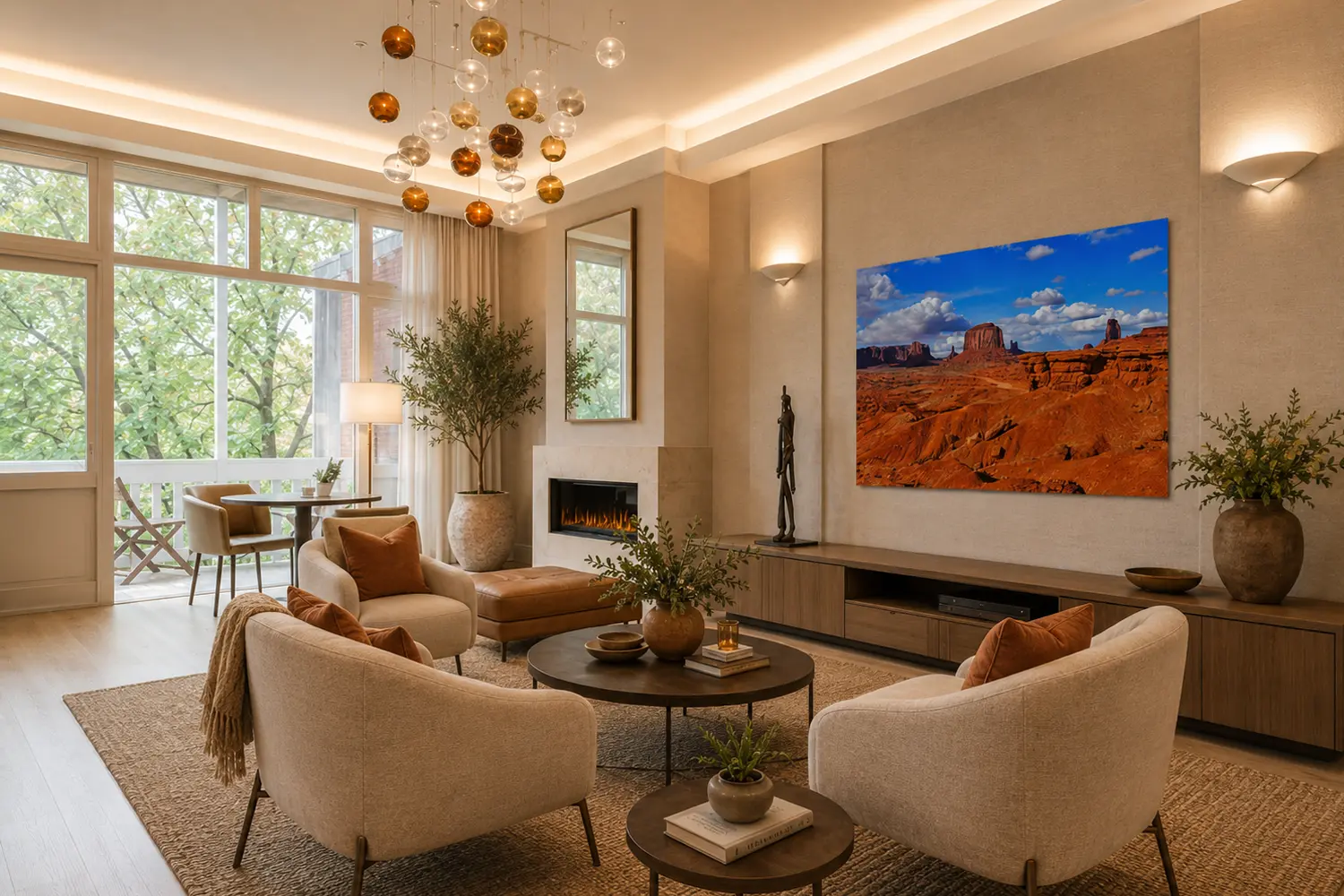
For interior placement, the horizontal composition with strong vertical buttes reads well across a wide range of wall contexts. Minimum recommended: 30×45″. At 40×60″ the cloud texture and the desert floor grain become independently legible — the image earns its scale.