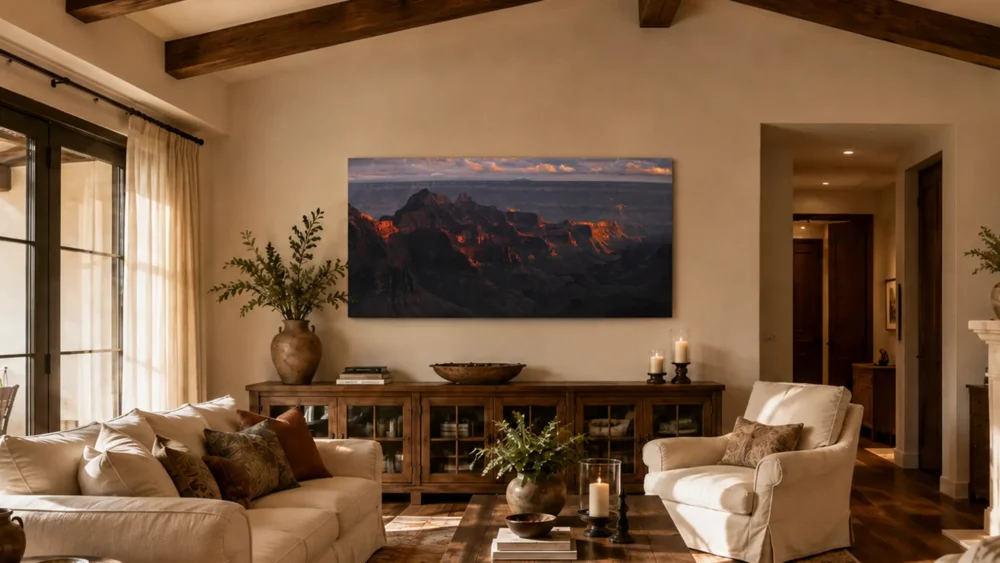
Use Arrows to explore details
Where the Earth Catches Fire
The Work
Fewer than one in ten Grand Canyon visitors ever stands on the North Rim.
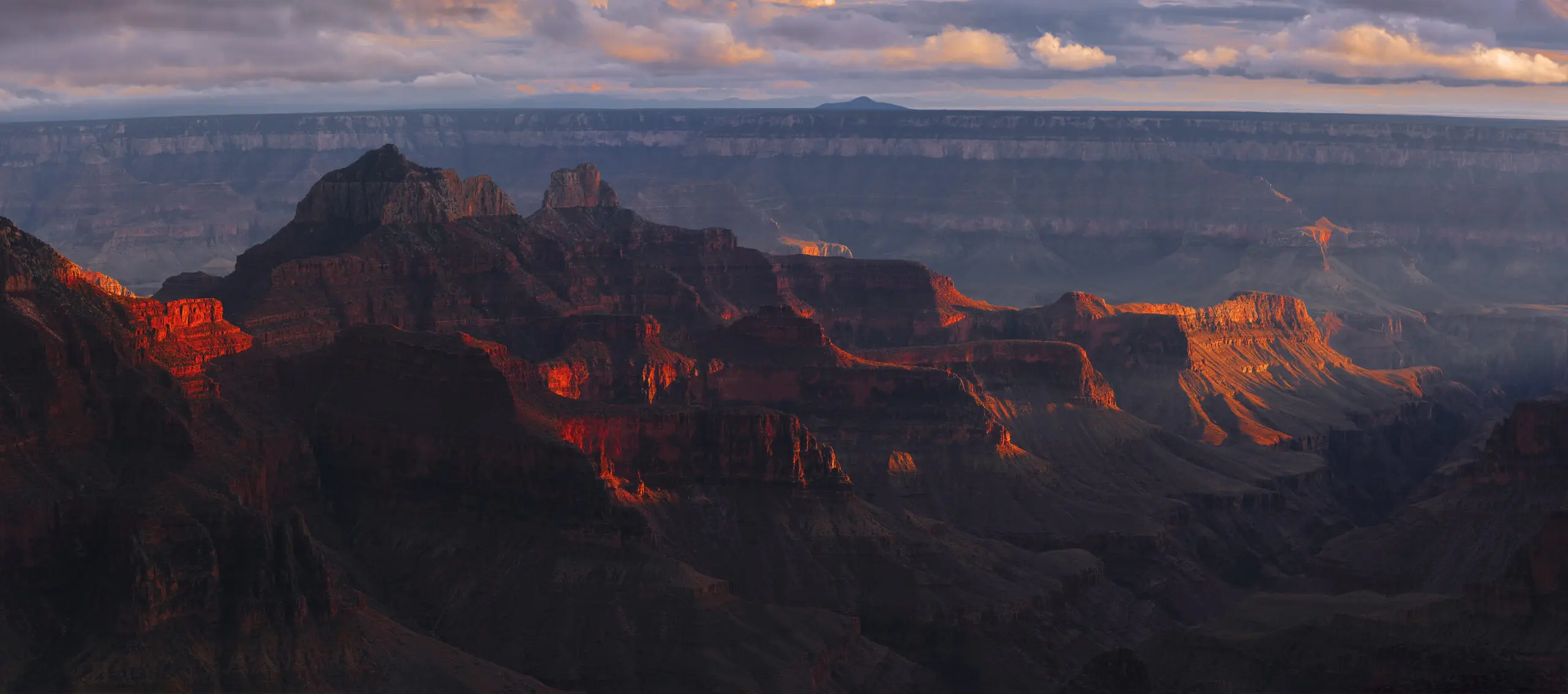
The North Rim closes every November and doesn’t reopen until late May — snow and road conditions make access impossible through the winter. In the summer months, when it is open, it draws roughly 500,000 visitors to the South Rim’s five million. Most people who have seen the Grand Canyon have seen it from the south side, looking north. This image was made looking south from the north side — a view the majority of visitors will never have.
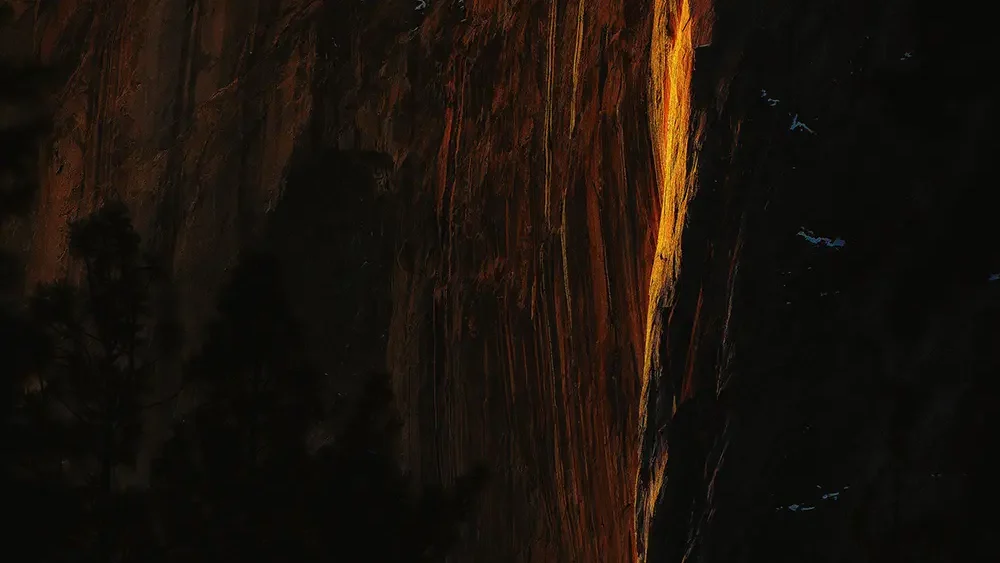
I was at [specific viewpoint — Cape Royal / Point Imperial / Bright Angel Point — to be confirmed] in the late afternoon, waiting for the canyon shadow to begin its climb from the floor. At Grand Canyon sunset, the shadow doesn’t fall across the canyon from one side — it rises from the river corridor at the bottom, climbing the walls while the upper formations stay in full light. For about twenty minutes the canyon is in two different states simultaneously: lit above, dark below, with the shadow line moving visibly upward at the speed you can almost track with the eye.
I made this as a panoramic to hold the full width of that transition.
The Location
The Edition
The Capture
Lens:32-64mm
Date – 02.2022 Sunrice
GPS Region: Grand Canyon North Rim, Arizona
The Print
Medium
ARCHIVAL METAL
Architectural-Grade Aluminum
Provenance
HAND SIGNED
Numbered & Signed by the Artist
Logistics
SAFE PASSAGE
Bespoke Archival Crating
Further Explorations
From the American Southwest Collection
Related Images