The Work
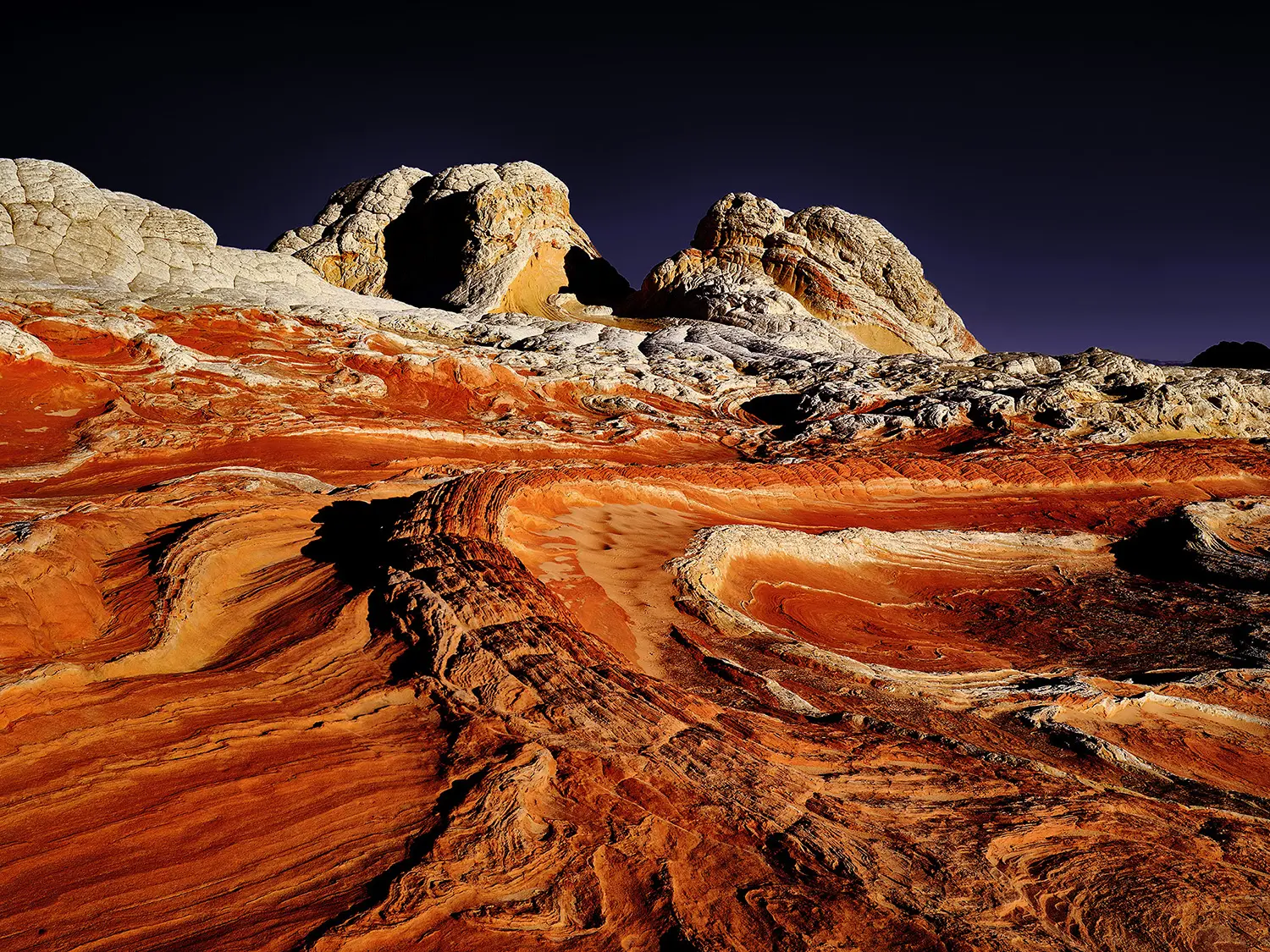
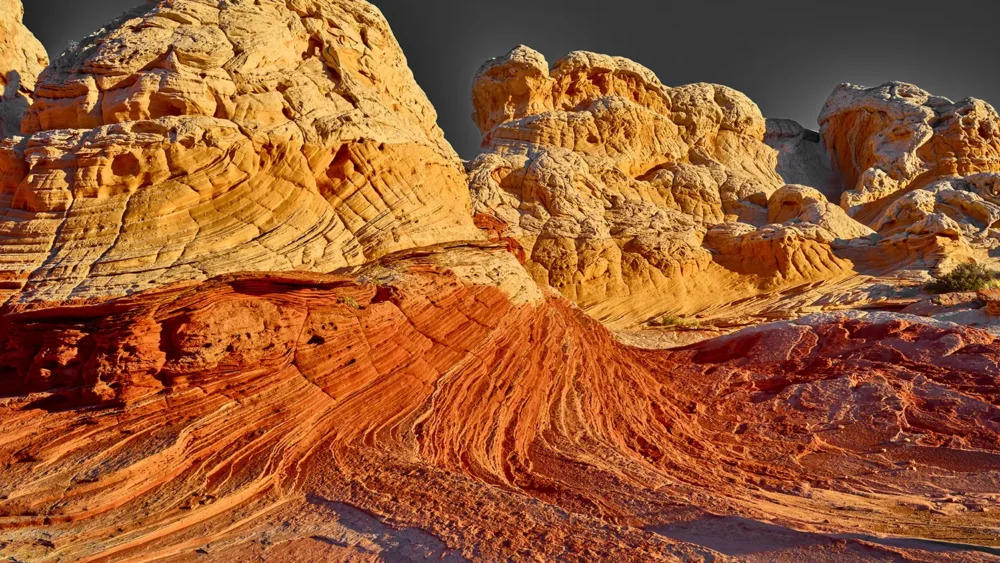
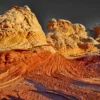
The frame contains no sky.
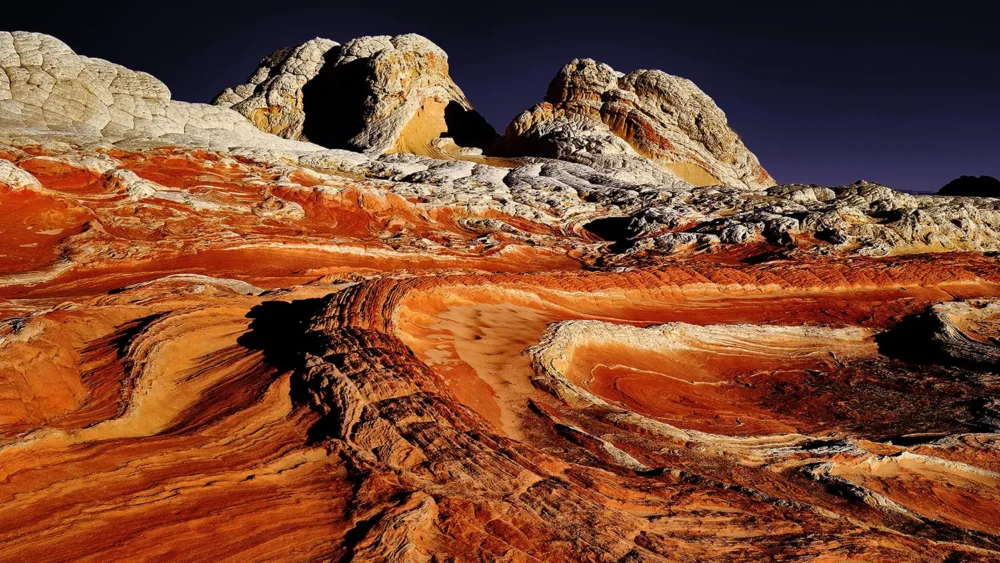
I worked the surface of one of White Pocket’s interior bowls for about ninety minutes, walking the rim and dropping into the basin to find the angle that read as pattern instead of place. The sun was high enough by then to push direct light into the cross-bedded layers — red, orange, pale cream — and the relief came up sharply on the ridges. There was no wind. No water. Nothing alive in the frame. Just the surface of an old dune turned to stone, photographed from above as if it were a chart.
I made this image to read as composition first and landscape second. Whether the viewer recognizes White Pocket is a question I left to the print.
The Location
White Pocket sits in the western half of Vermilion Cliffs National Monument, on the Arizona–Utah border. The surface is cross-bedded Navajo sandstone — wind-laid Jurassic dunes from roughly 190 million years ago, lithified, exposed, and weathered into the layered swirls visible today. Each line in this image is a record of a specific wind direction on a single ancient afternoon. The fluid quality is not metaphor; the rock holds the form the wind gave it.
Access to the location is extremely difficult; it requires a 4×4 vehicle—specifically one equipped for driving through deep sand—as well as experience navigating such challenging terrain. Driving after rain renders the road impassable.
The Edition
Signature Series. Edition of 15, hand-signed and numbered. Each acquisition is accompanied by a Certificate of Authenticity with hologram provenance seal. Edition 13 of 15 available.
The Capture
System: FujifilmGFX
Lens: 45-100mm
Date;12,2023 morning
GPS Region: White Pocket, Vermilion Cliffs National Monument, Arizona
The Print
An abstract surface like this asks more of paper than a conventional landscape does. There is no sky to anchor exposure, no dark to provide contrast — the entire frame lives in the middle two-thirds of the tonal range, and the ridge edges depend on sub-millimeter colour transitions that any compression destroys. Printed on Hahnemühle Photo Rag 308gsm, the rendered surface reads almost as a graphite drawing at close range; the texture of the cotton rag and the texture of the rock become hard to separate.
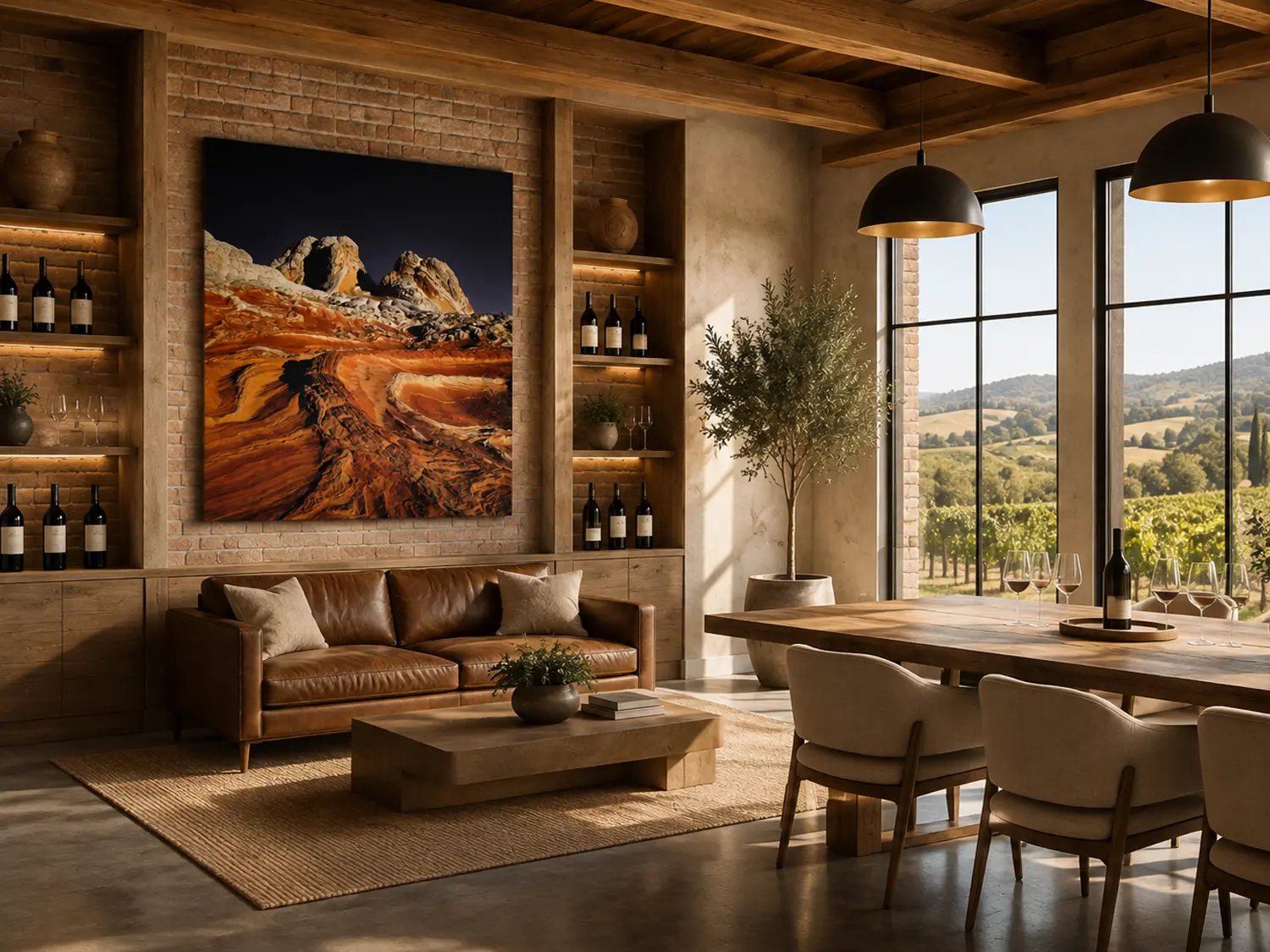
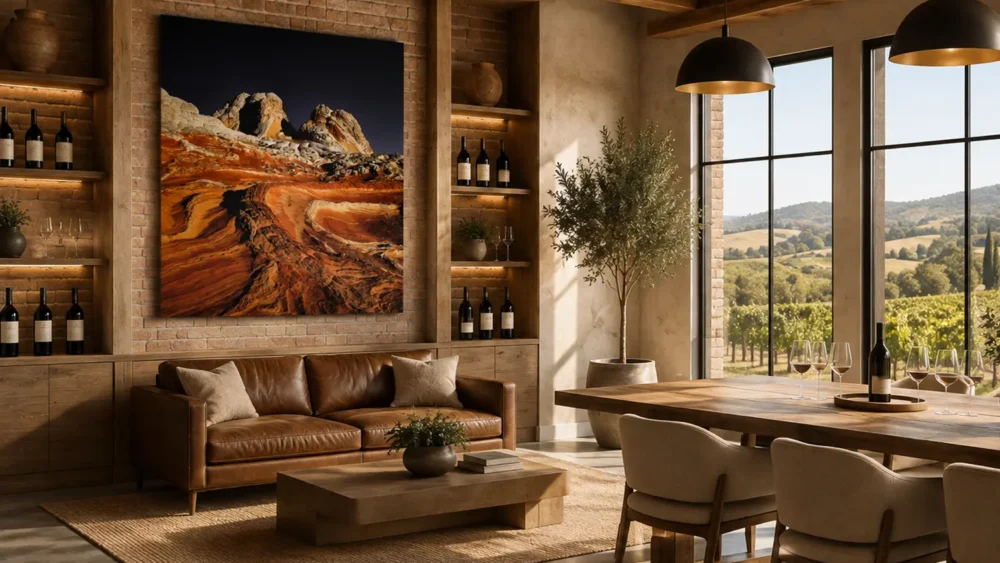
For framing, this image rewards size and air. Recommended minimum 30×45″ with a generous mat. For hospitality and statement-piece placements, 48×72″ face-mounted to acrylic loses none of the surface detail and reads from across a room.