The Work
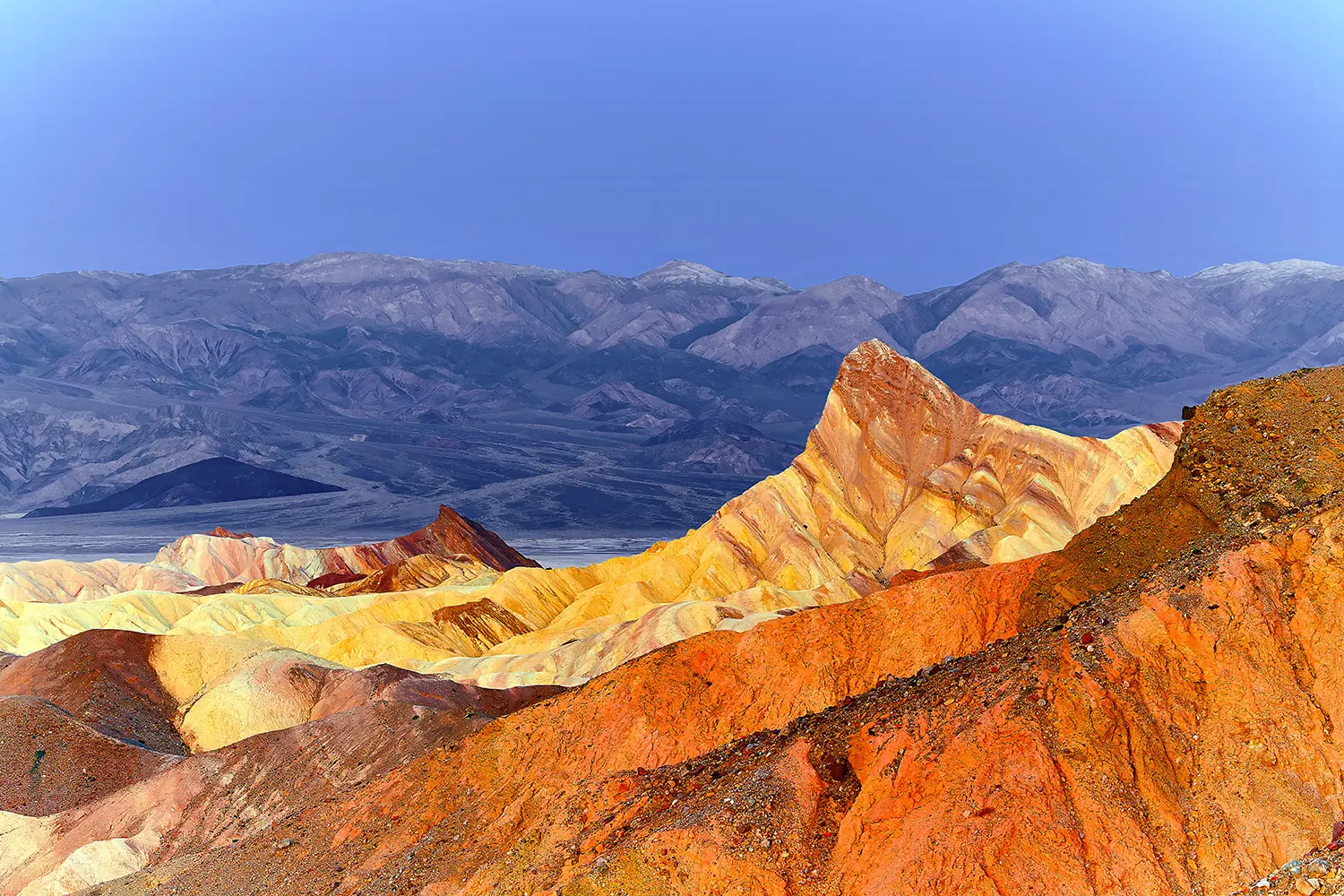
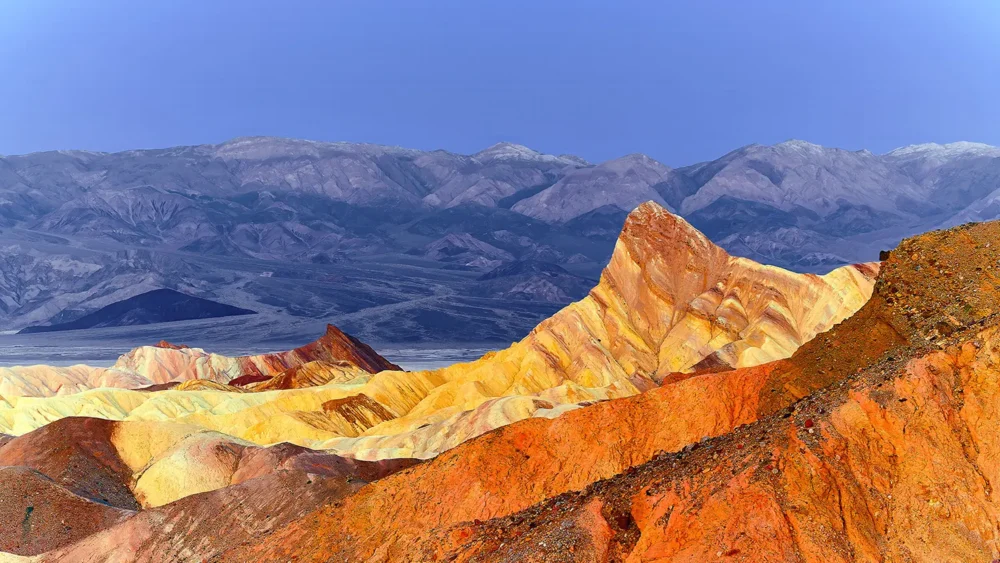
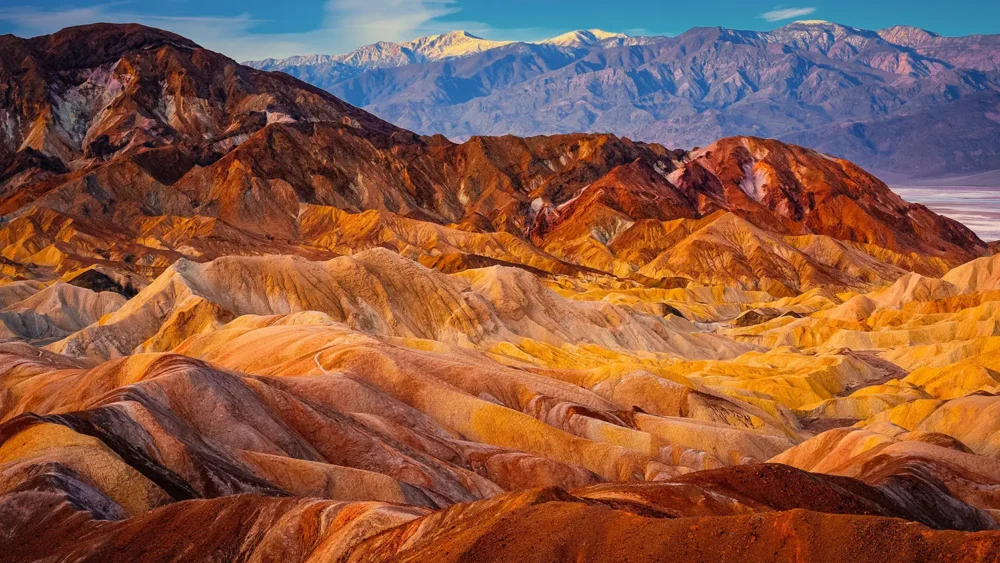
The badlands at Zabriskie Point are not rock. They are dried lake bed — ancient sediment from a body of water that covered this part of Death Valley for three million years and then, around ten thousand years ago, stopped.
I was there in December, shortly after first light, when the sun was still low enough to rake across the ridges without washing them out. The colour banding — the gold, the rust, the pale cream — is not a lighting effect. Those are different mineral deposits laid down in different lake periods, each stripe representing tens of thousands of years of accumulation.
I made this as a three-frame panoramic stitch to hold the full width of the formation without sacrificing the detail in the erosion channels. At 40×60″ you can read individual ridgelines. At a normal viewing distance, it reads as a painting. On close inspection it reads as a geological survey.
The Location
Zabriskie Point sits at 710 feet above the valley floor in the Amargosa Range on the eastern edge of Death Valley National Park, California. The formation is composed of Furnace Creek mudstones — lake sediments from the Pliocene epoch, uplifted and dissected into their current badlands profile by several million years of erosion. The colour banding visible in the image represents distinct depositional periods: iron oxides produce the rust tones, volcanic ash produces the cream layers, manganese produces the occasional dark stripe.
In December the valley receives fewer than 4,000 visitors — compared with over 100,000 in March. The image was made in the park’s quietest season, in light that travels a lower arc and holds its gold longer.
The Edition
Studio Edition. Edition of 25, hand-signed and numbered. Each acquisition is accompanied by a Certificate of Authenticity with hologram provenance seal. Edition 23 of 25 available. 2 sold.
The Capture
System: Hasselblad (X1D-50c II — to be confirmed from EXIF)
Lens: 50mm
Technique: 3-frame panoramic stitch
Date/Time: December 2020 | 9:43 AM (AM to be confirmed — see note)
GPS Region: Zabriskie Point, Death Valley National Park, California
The Print
A three-frame panoramic stitch at medium format resolution produces a file that can comfortably fill a 48-inch wide print without interpolation — the detail in the erosion channels is genuinely present in the data, not reconstructed. Printed on Hahnemühle Photo Rag 308gsm, the warm mineral palette holds without shifting toward orange or yellow; the rust tones separate from the gold because the paper’s neutral base doesn’t add warmth the image doesn’t already have.
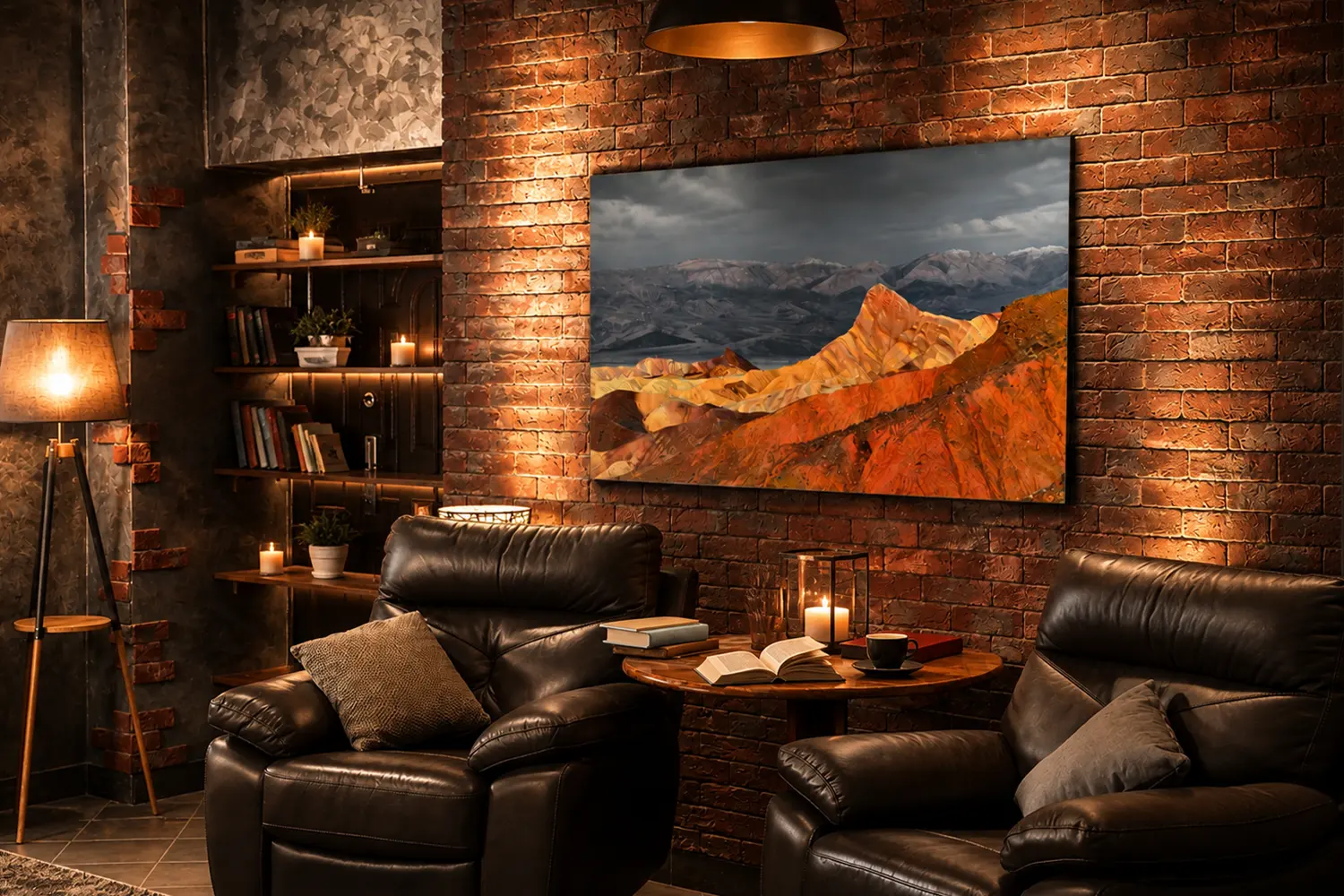
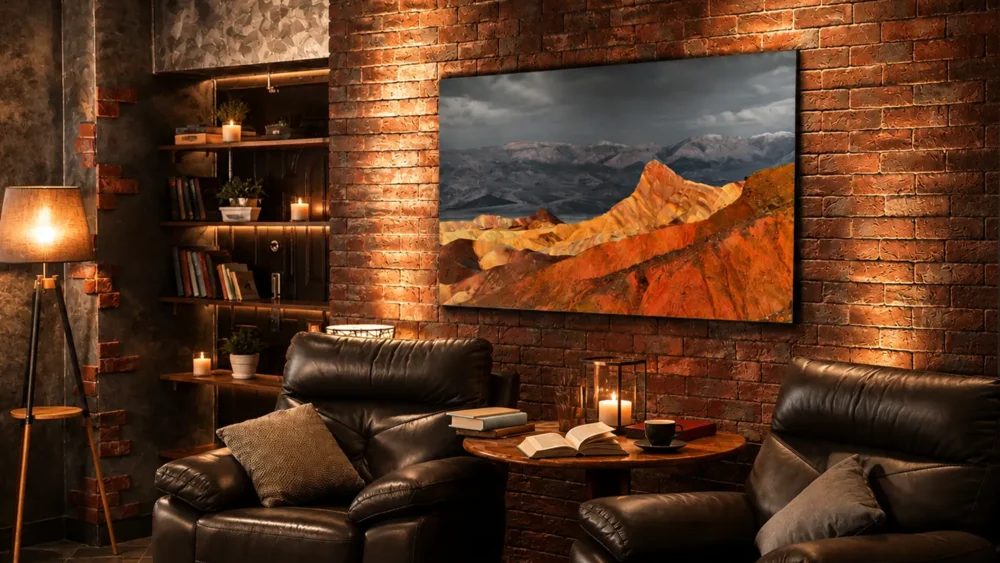
Recommended minimum: 30×45″. At 40×60″ the full resolution of the panoramic stitch becomes legible and the geological banding reads as intended. For interiors with warm natural materials — travertine, sandstone, terracotta tile — this image extends the palette of the room rather than contrasting with it.