The Work
I almost didn’t see the tree.
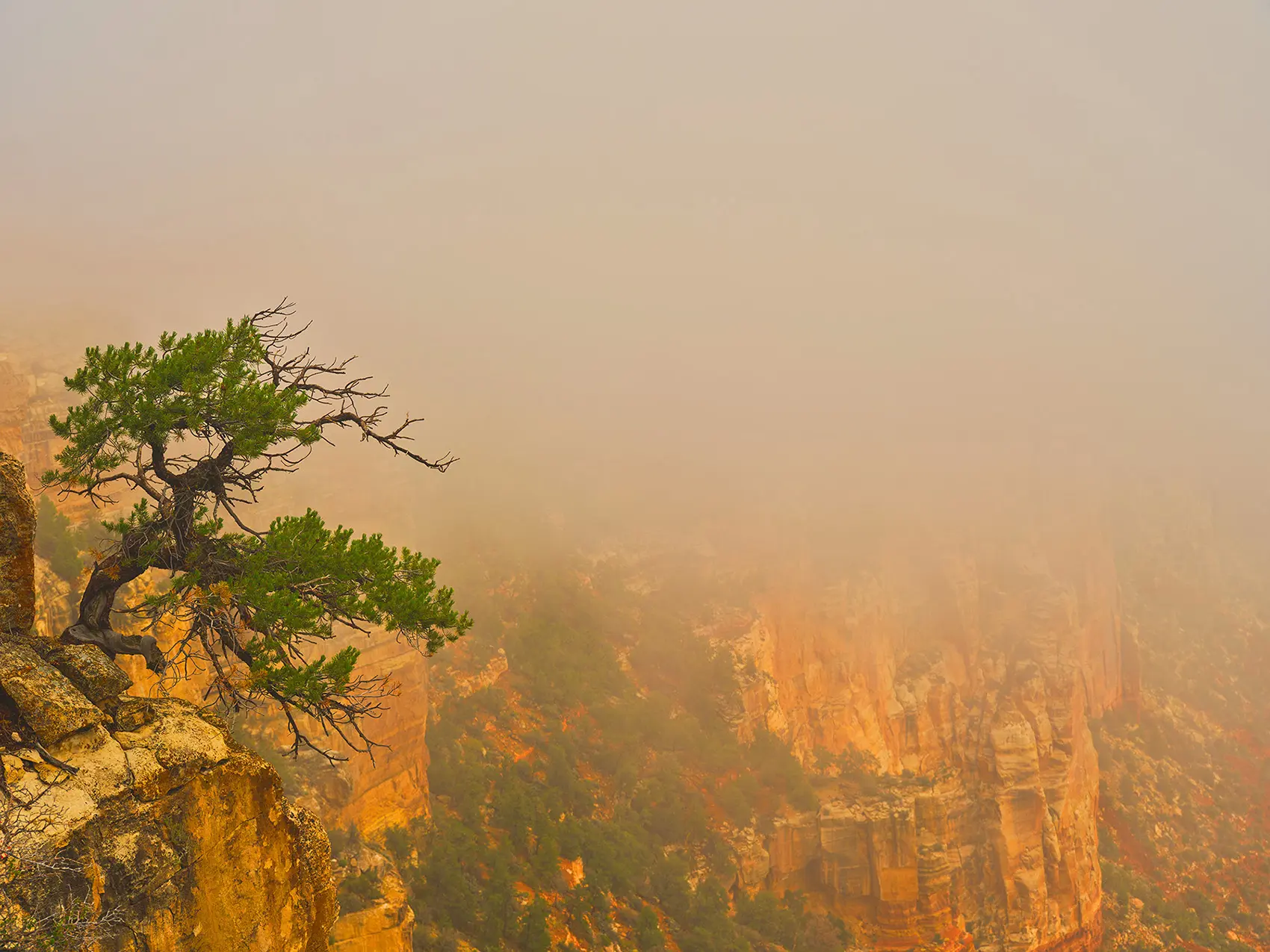
The Grand Canyon was socked in that morning — 09.29.202, North Rim. The fog had settled into the canyon overnight and was rising in slow waves, filling the upper reaches with a golden haze that obscured everything beyond 20 feet. The canyon’s famous depth was gone. The layers, the colours, the mile-deep drop — all invisible. What remained was mist, and silence, and the vague shapes of the nearest rim features.
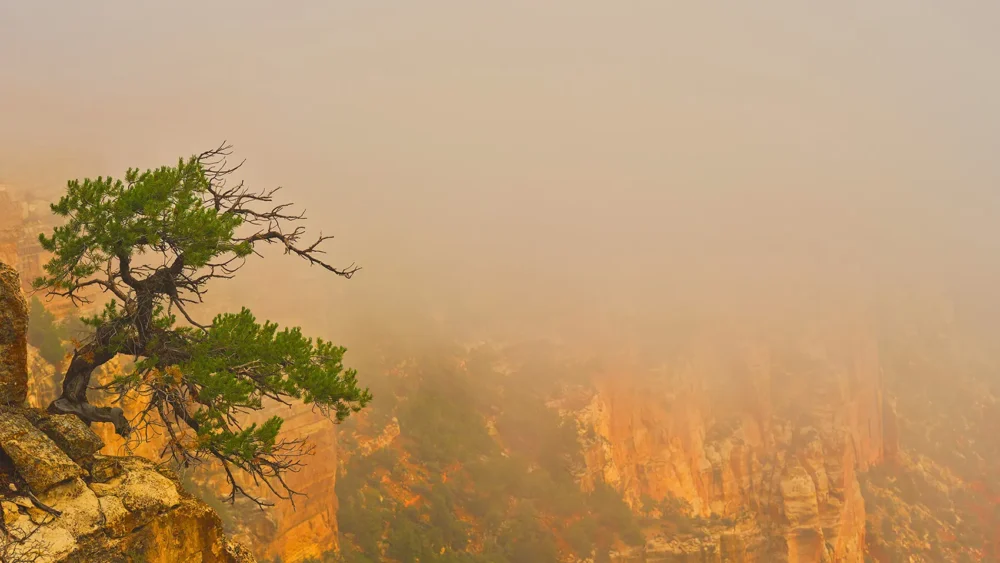
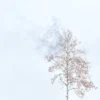
I was walking the path toward when the tree appeared. Not dramatically — it didn’t emerge from the fog like a revelation. It was just there, a few feet from the edge, in a patch where the mist had thinned enough to reveal its silhouette. A pinyon pine , perhaps 5-7 feet tall, rooted in a crack in the limestone rim. Behind it, nothing. The canyon had become a void of gold.
I made 3 frames. The mist shifted constantly — thickening, thinning, sometimes erasing the tree entirely, sometimes revealing a faint suggestion of the canyon walls behind it. This frame is the one where the balance held: the tree fully visible, the canyon fully dissolved, the mist bright enough to glow but not bright enough to flatten.
Yes — it had been a dream of mine to be on the North Rim in fog. But the reality exceeded anything I had imagined. At times, I could not even see the path leading toward Wotan’s Throne — a place I had photographed from very close range the day before — even when I was standing only fifteen feet away.
I waited a few minutes, and slowly the fog began to lift just enough for me to reach my pine tree. As the sun rose, its color touched the mist, changing its tone and giving the entire scene an unexpected softness. The weather completely surprised me. It had not been part of the plan, but it became a beautiful gift.
As the fog drifted through the canyon, it revealed and concealed the landscape in turns — allowing certain forms to appear for only a moment before disappearing again into silence.
I did not set out to make a photograph about resilience. But I understand why people read it that way. The tree is alone, exposed, rooted in stone, surrounded by emptiness. It looks the way certain mornings feel. I’ll leave the meaning to the viewer. The photograph is simply what was there.Thank You.
The Location
Grand Canyon National Park encompasses 277 miles of the Colorado River corridor in northern Arizona. The canyon is up to 18 miles wide and over a mile deep — a geological cross-section spanning nearly 2 billion years of Earth’s history.
Defiance in the Mist was captured on the North Rim, near. Morning fog and mist inversions at the Grand Canyon occur when cold air settles into the canyon overnight and warm, moist air rises at dawn, creating a layer of golden haze that fills the upper canyon. Full inversions — where fog fills the entire canyon to the rim — are rare a few times per year and draw photographers from across the country. The conditions in this image represent a fog event morning mist, still unpredictable.
The Edition
Defiance in the Mist is released as a strictly limited edition of 15 prints worldwide, offered in three sizes. Once the 15th print is sold, the image is permanently retired.
Every print is hand-signed and numbered on the recto by the artist, accompanied by a serialized Certificate of Authenticity with dual-hologram provenance, personally inspected before leaving the studio, and registered in the Light & Shadows edition archive.
Current edition status: Edition 14 of 15 available. 1 sold.
The Capture
System: Fujifilm GFX
Lens:100-200mm
GPS Region: North Rim, Grand Canyon National Park, Coconino County, Arizona
The Print
Produced on Hahnemühle Photo Rag 308gsm — 100% cotton, acid-free, museum-grade — using archival carbon pigments.
The dominant passage in Defiance in the Mist is the golden mist itself — a continuous tonal field that transitions from warm gold near the tree to cool grey-blue in the upper distance. This gradient must read as atmosphere, not as a flat wash of colour. The cotton rag substrate’s matte surface eliminates the specular reflections that would interrupt the gradient on metallic or glossy media, and its natural fibre texture adds a micro-variation to the mist that reads as depth rather than uniformity. The effect is that the mist appears to have volume — you sense the distance between the tree and the invisible canyon beyond, even though the canyon itself is not visible.
The tree is the sharpest element in the image, and at 40×60″ its texture — bark, needles, the twist of branches shaped by rim winds — becomes highly detailed against the soft mist. This contrast between sharp subject and soft environment is what gives the print its physical presence.
Framing in hand-finished hardwood with museum glass. The artist recommends natural oak — a warm, neutral frame that doesn’t compete with the mist’s golden tonality, or white gallery frame for a clean, contemporary presentation that lets the mist float.
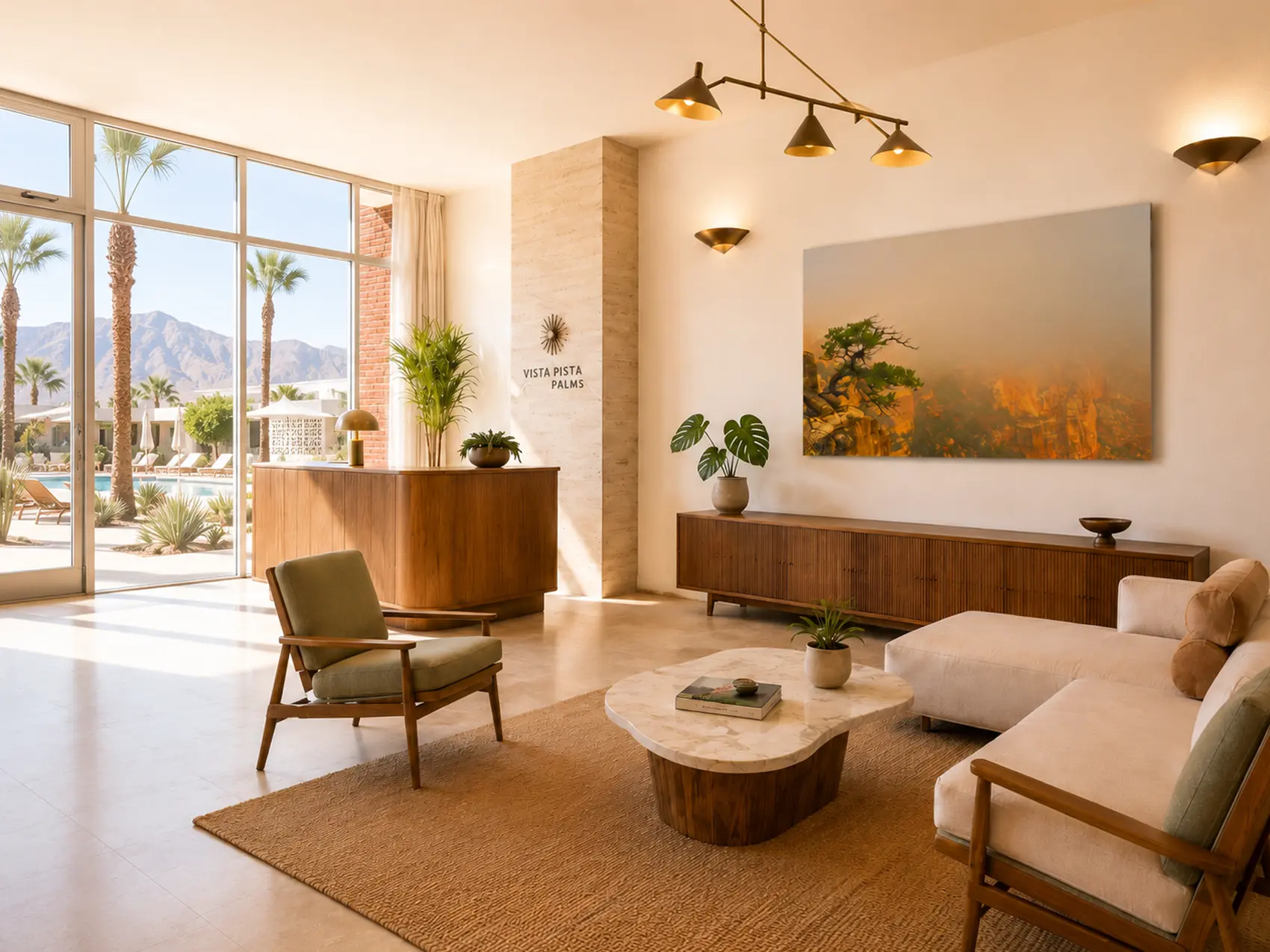
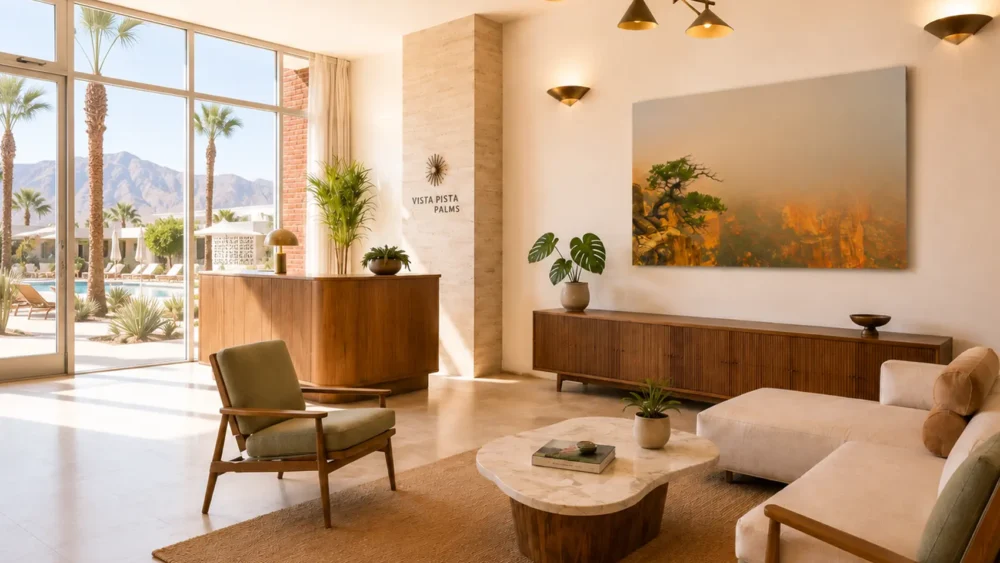
Defiance in the Mist is one of the collection’s most versatile pieces for hospitality placement — its warm amber palette, atmospheric restraint, and single-subject composition allow it to integrate into design contexts that most dramatic landscape photography cannot occupy without competing with the room’s own visual identity. The image has been rendered for boutique mid-century modern resort properties in Palm Springs and the wider Southwest hospitality market, where the print’s warm tones dialogue with brass fixtures, travertine and walnut materials, and the specific design vocabulary of that tradition. Design consultation and hospitality trade acquisition inquiries are available through the studio.