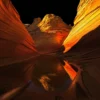
The Work
Everyone has seen Monument Valley. It is the most filmed landscape in America — John Ford’s Westerns, Forrest Gump’s long run, a thousand car commercials and airline advertisements. The buttes are so embedded in visual culture that most people feel they’ve been there even if they haven’t.
That familiarity is the challenge. And it’s the reason most Monument Valley photographs feel like postcards — they confirm what you already know rather than showing you something new.
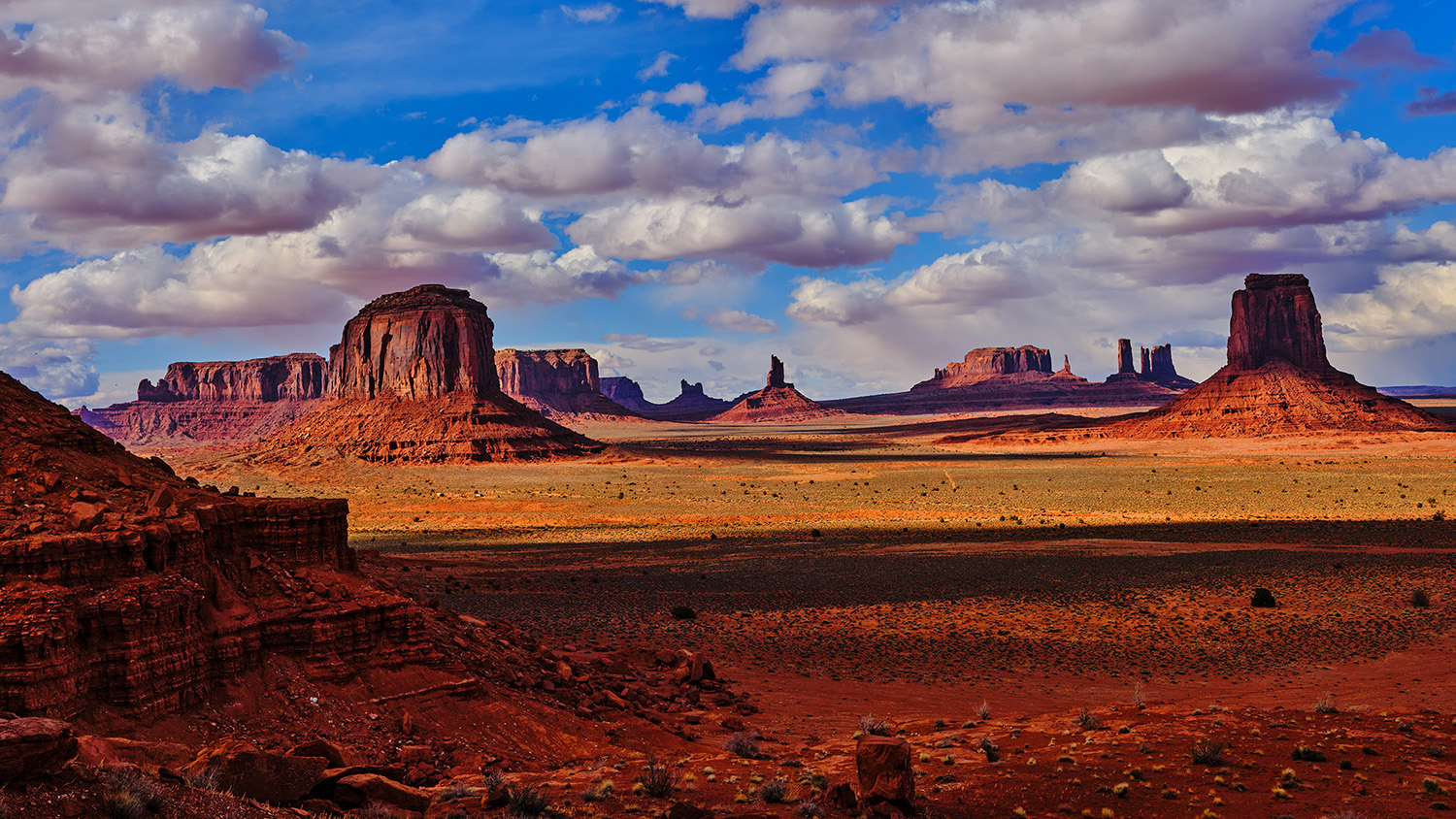
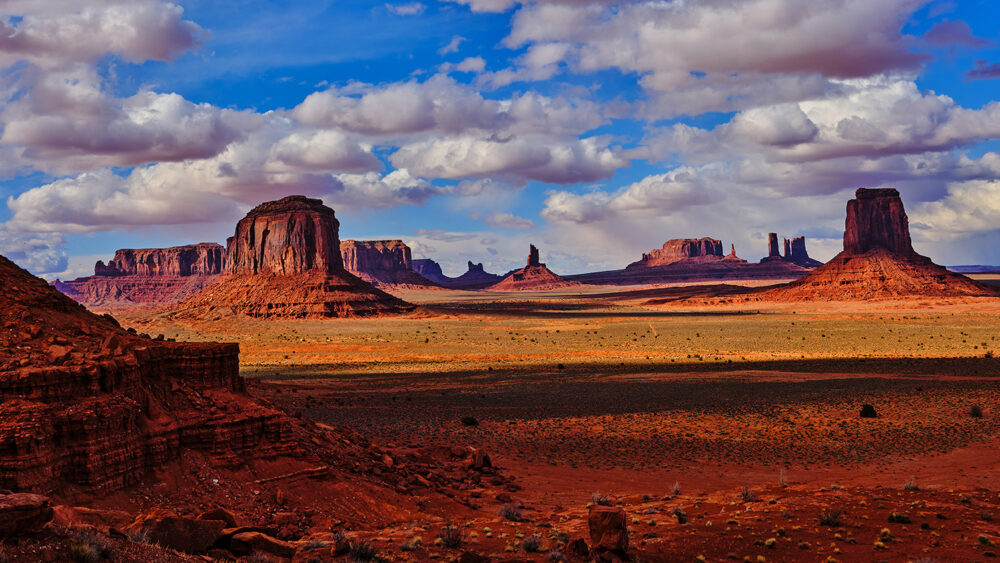
Echoes of the Ancients was made on March 14,2024 at 04,09pm, from — John Ford Point. The conditions that morning, the cloud movement. What made this frame different from the thousand other Monument Valley frames was a particular cloud formation, a shadow falling across a butte, a colour in the sky, a quality of the light on the desert floor that created the texture visible in the foreground.
During that trip, I spent five days in Monument Valley, staying at the campground and getting around the valley by car. It wasn’t my first time there—I love this place, and whenever I’m in the vicinity, I always stop by for a few days.
I titled it Echoes of the Ancients because that is what the buttes feel like from the valley floor — not mountains, not rocks, but echoes. The formations are remnants of a plateau that once covered the entire region. What you see is what’s left after millions of years of erosion removed everything else. Each butte is an echo of a landscape that no longer exists.
The Location
Monument Valley Navajo Tribal Park (Tsé Biiʼ Ndzisgaii, “the valley of the rocks”) straddles the Arizona-Utah border within the Navajo Nation. The sandstone buttes — including the iconic East and West Mitten Buttes, Merrick Butte, and the Three Sisters — are remnants of the Cutler Formation, eroded from a once-continuous plateau by millions of years of wind and water.
The valley floor sits at approximately 5,564 feet elevation. The buttes rise 400 to 1,000 feet above the desert floor. Access to the valley is managed by the Navajo Parks and Recreation Department, and certain areas are accessible only with a Navajo guide.
Monument Valley holds deep cultural and spiritual significance for the Diné (Navajo) people. The formations are not merely geological — they carry names, stories, and ceremonial importance that predate European contact by centuries. Photographing here is a privilege granted by the Navajo Nation, and this image is presented with respect for that history and that stewardship.
The Edition
Echoes of the Ancients is released as a strictly limited edition of 25 prints worldwide, offered in three sizes. Once the 25th print is sold, the image is permanently retired.
Every print is hand-signed and numbered on the recto by the artist, accompanied by a serialized Certificate of Authenticity with dual-hologram provenance, personally inspected before leaving the studio, and registered in the Light & Shadows edition archive.
Current edition status: Edition 22 of 25 available. 3sold.
The Capture
System: Fujifilm GFX
Lens: 45-100mmDate/Time: 03.2024
GPS Region: Monument Valley Navajo Tribal Park, Arizona
The Print
Produced on Hahnemühle Photo Rag 308gsm — 100% cotton, acid-free, museum-grade — using archival carbon pigments.
Echoes of the Ancients contains the widest colour gamut in the collection’s panoramic work: the red-orange of the sandstone buttes, the warm tan of the desert floor, the blue of the sky ranging from deep cobalt to near-white at the clouds, and the cool grey-purple of distant formations receding into atmospheric haze. This five-zone colour spread is where the Hahnemühle substrate demonstrates its technical advantage most clearly — each zone holds its colour identity without bleeding into the adjacent zone. The red stays red. The sky stays blue. The desert floor stays warm and separate from both.
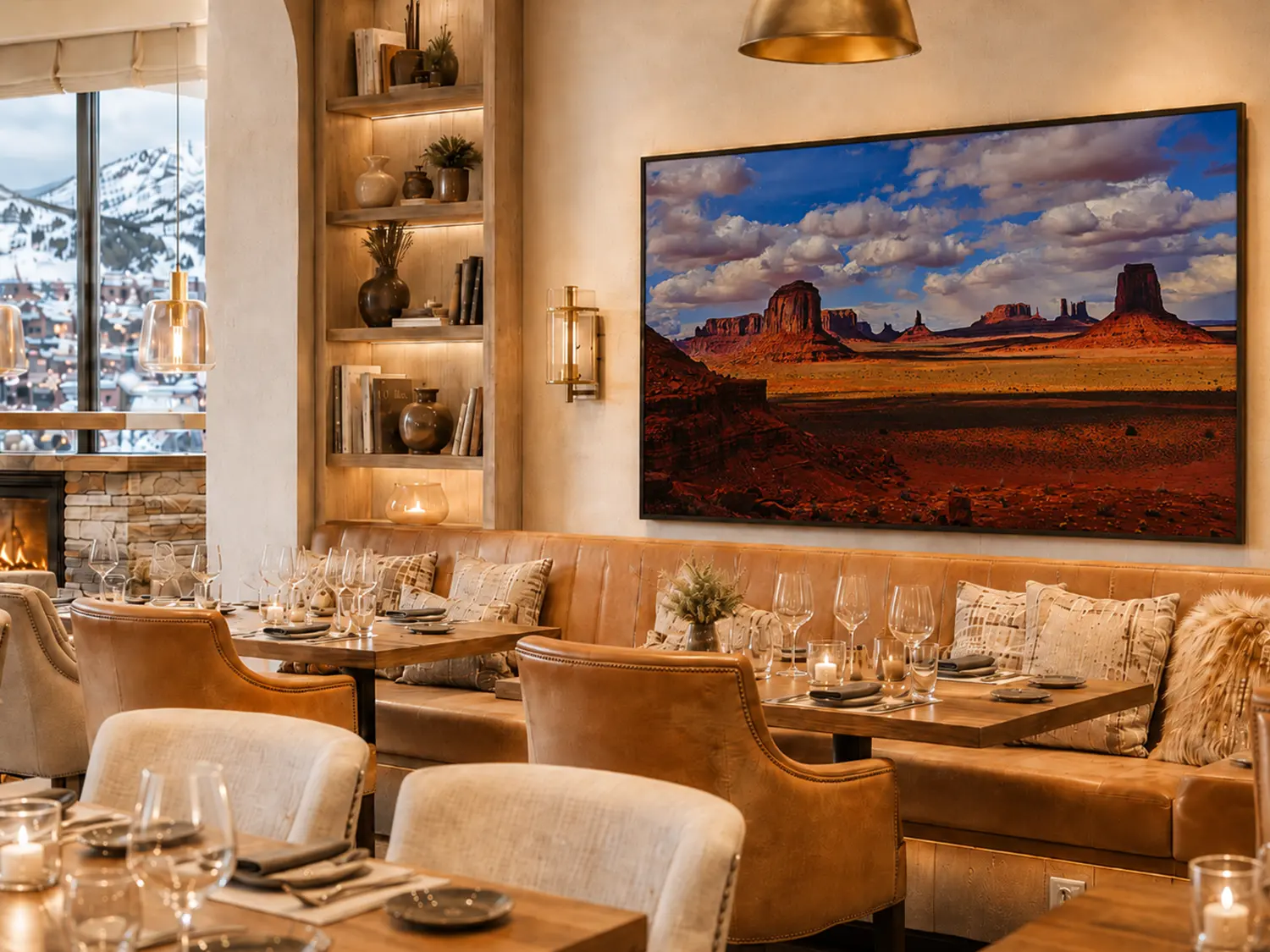
At 36×72″ — six feet wide — the atmospheric perspective becomes immersive. The distant formations recede into haze, the near buttes anchor the foreground with sharp detail, and the sky stretches overhead. The panoramic format is not a crop — it is the native composition, because the valley’s drama is horizontal, not vertical.
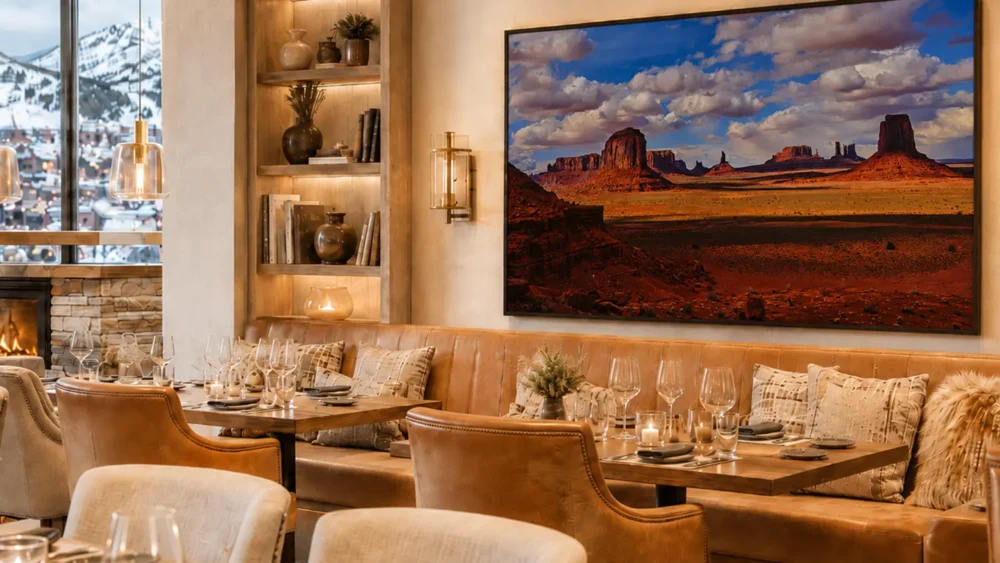
Framing in hand-finished hardwood with museum glass. The artist recommends natural walnut for warm interiors or matte black for a contemporary, gallery-style presentation.