The Work
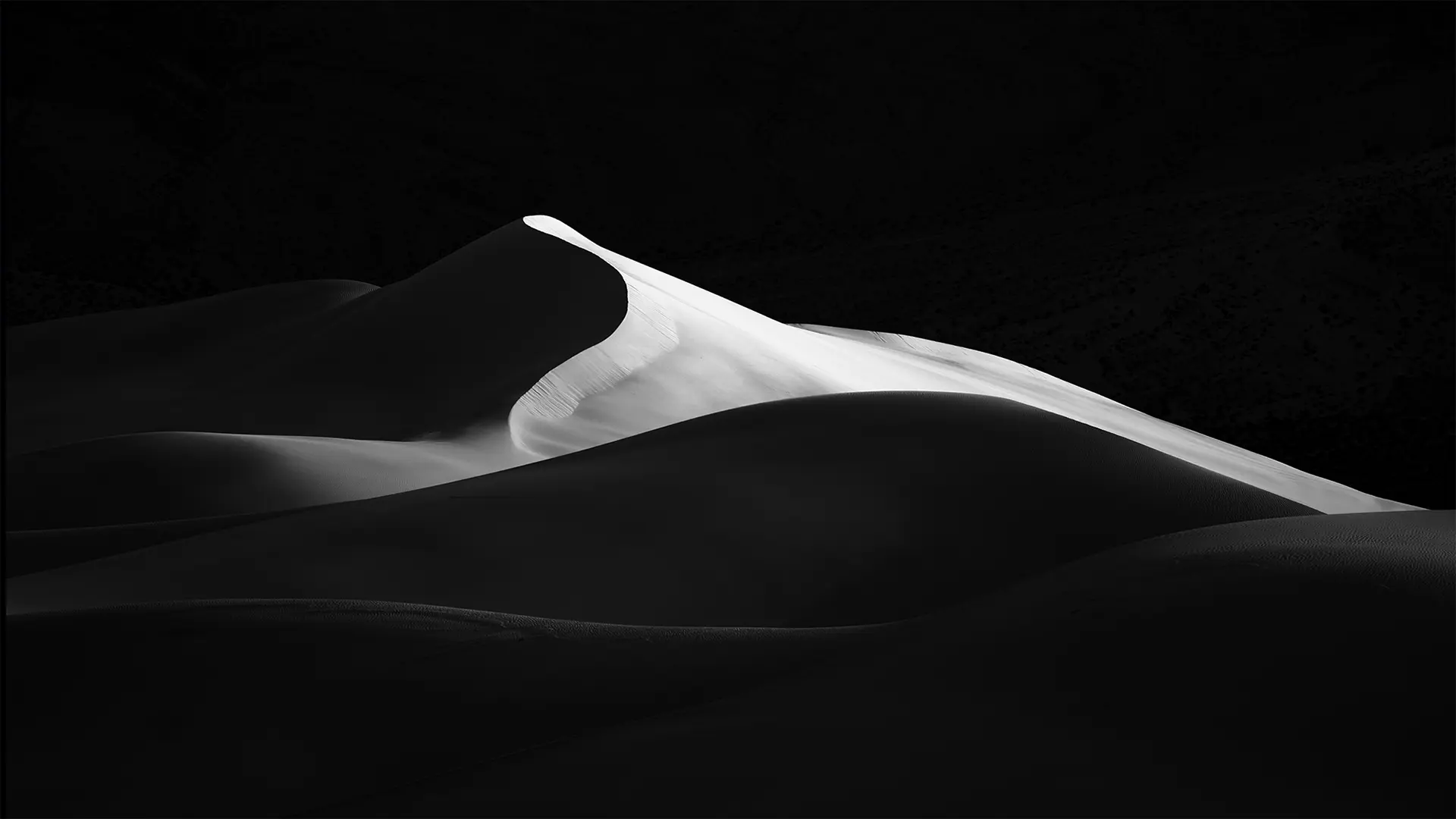
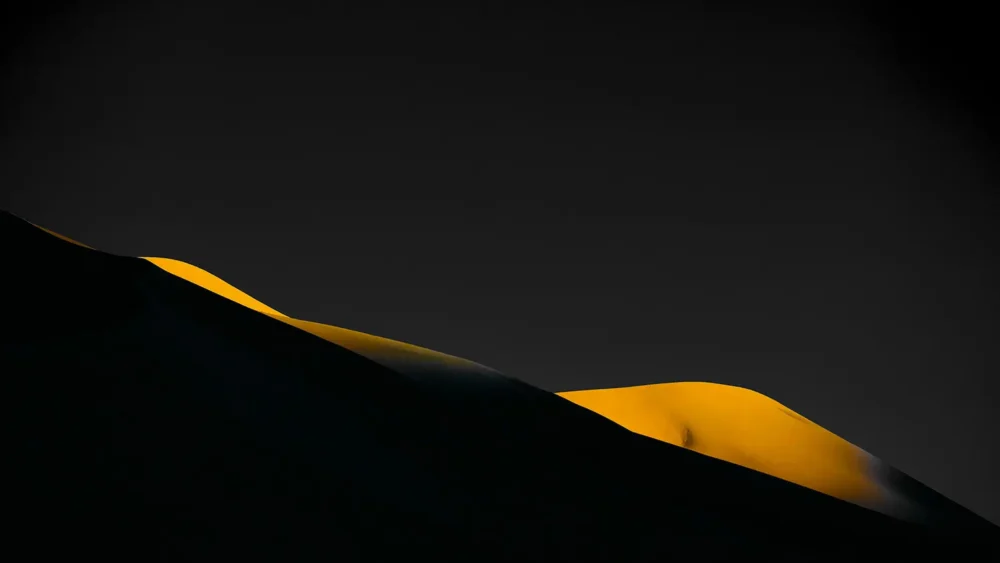
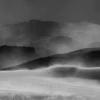
There is a point on the tonal scale where sand stops being sand and becomes light. Pale Line lives at that point.
In every other Eureka Dunes study, the crest holds detail — you can read the grain, the texture, the edge where lit sand meets shadow. In Pale Line, the ridge has crossed over. The light is so direct, the angle so precise, that the crest overexposes into a luminous band with no visible surface. The sand has dissolved. What remains is not a ridge but a glow — a pale line drawn across darkness by the sun itself.
I made this image on 03.2026, approximately 30 minutes after sunrise — later than most of the other dune captures, when the sun had climbed high enough to strike the crest head-on rather than at a raking angle. The difference is everything. Raking light reveals texture. Direct light erases it. I was standing at 200 food, distance and what I saw through the viewfinder was not a dune but an absence — a bright void where the ridge should have been.
If Shadowline is the dark end of the Eureka Dunes body of work — the ridge reduced to a black drawing — then Pale Line is the bright end. They are opposites. One is shadow holding form. The other is light dissolving it. Hung together, they describe the full tonal range of what the dunes can become.
The Location
Eureka Dunes rise nearly 700 feet above the floor of the Eureka Valley in the remote northern reaches of Death Valley National Park — the tallest dune system in California, and one of the most isolated. The valley sits at the edge of the Inyo Mountains, on the far side of two unpaved roads and a long silence. Visitors are rare. Light arrives slowly here, often without warning.
The luminous quality visible in Pale Line occurs when the sun clears the eastern ridgeline and strikes the dune crest from a steep angle — typically 40 minutes after sunrise, depending on the season. At this angle, the sand reflects light directly back toward the camera rather than scattering it across the surface. The texture disappears. The ridge becomes a source rather than a surface.
The Edition
Pale Line is released as a strictly limited edition of 15 prints worldwide, offered in three sizes. Once the 15th print is sold, the image is permanently retired.
Every print is hand-signed and numbered on the recto by the artist, accompanied by a serialized Certificate of Authenticity with dual-hologram provenance, personally inspected before leaving the studio, and registered in the Light & Shadows edition archive.
Current edition status: Edition 15 of 15 available. 0 sold.
The Capture
System: FujifilmGFX
Lens: 500mm
Date/Time:03.2026 30 minutes after sunrise
GPS Region: Eureka Valley, Inyo County, California
The Print
Produced on Hahnemühle Photo Rag 308gsm — 100% cotton, acid-free, museum-grade — using archival carbon pigments rated for over 100 years of stability.
The printing challenge in Pale Line is the inverse of Shadowline. Where Shadowline demands that the dark areas hold depth without collapsing to pure black, Pale Line demands that the bright ridge hold presence without collapsing to pure white. The crest must glow — it must read as luminous, as overexposed, as brighter than any other ridge in the collection — but it cannot become blank paper. There must be the faintest trace of warmth, of density, of substance within the brightness. The Hahnemühle cotton rag achieves this because the fibre absorbs a micro-amount of pigment even in the lightest passages, producing a highlight that is warm and alive rather than empty.
On metallic or glossy substrates, the highlight zone tends to merge with the surface reflectivity of the material itself — the ridge becomes indistinguishable from glare. On the matte cotton rag, the brightness belongs to the image, not the paper. The glow is the dune’s, not the substrate’s.
Framing in hand-finished hardwood with museum glass. The artist recommends natural oak or light ash — a pale frame that extends the luminous quality of the ridge through the border, the opposite of the blackened ash recommended for Shadowline.
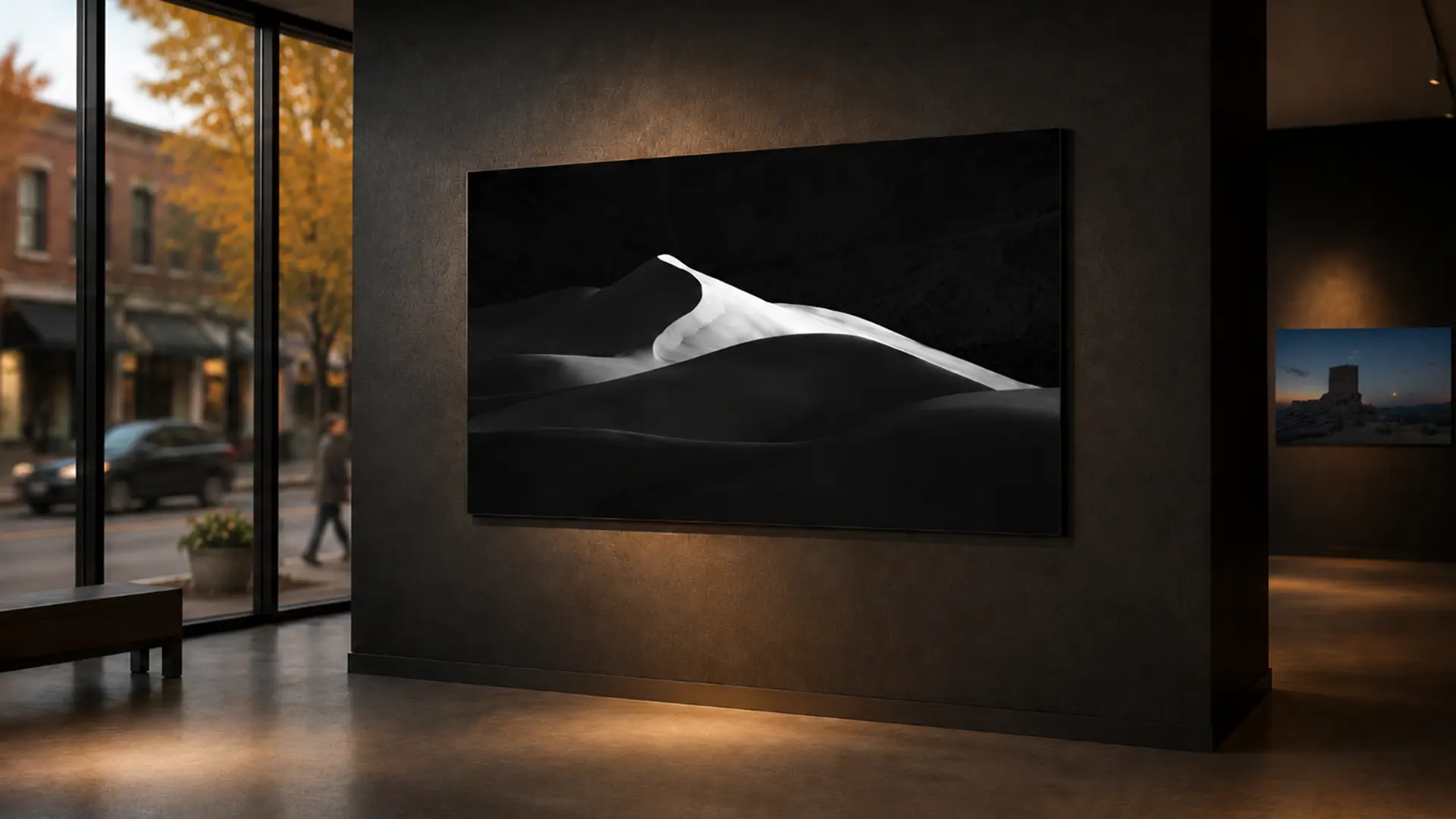
Pale Line at approximately 60×108″, face-mounted to acrylic, installed on a dark feature wall in a private fine art gallery with floor-based accent lighting. The luminous dune ridge appears to emanate light from within the wall rather than reflect off its surface. Autumn street visible beyond — the gallery in a walkable arts district at evening opening hours.