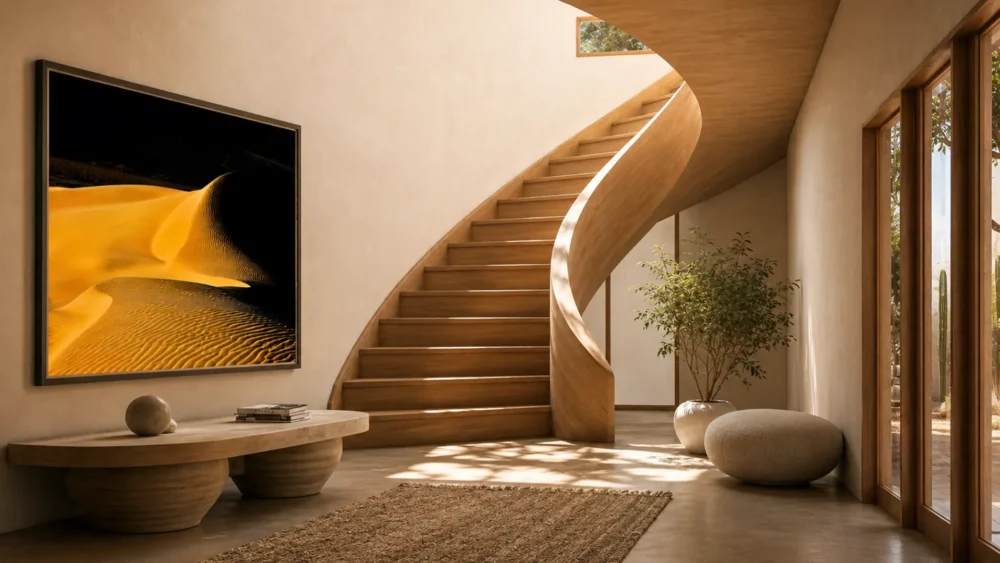
The Work
One line.
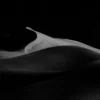
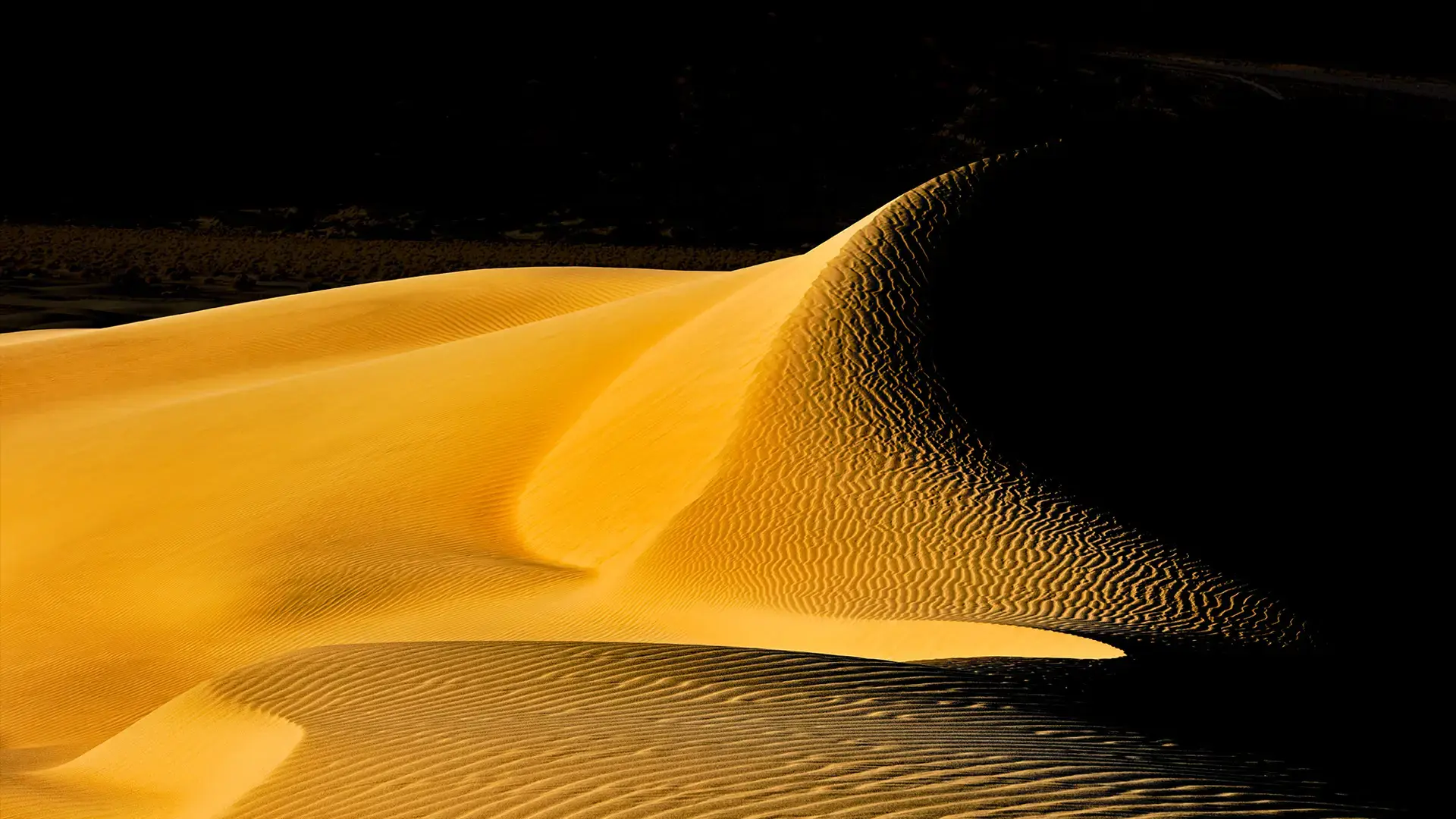
The entire image is one line — a single ridge of sunlit sand dividing light from dark. Everything else has been removed: the sky, the horizon, the context, the geography. What remains is the dune reduced to its most essential gesture.
Shadowline was not planned. I had been working the Eureka Dunes for 5 days and mornings, making wider compositions — images that show the scale, the valley, the mountains behind. This frame happened when I stopped looking at the landscape and started looking at the light itself. The sun was low enough that only the uppermost crest was lit. The rest of the dune face had fallen into deep shadow. The entire 700-foot dune field was invisible except for this single line.
I made a short sequence and walked away. There was nothing to add.
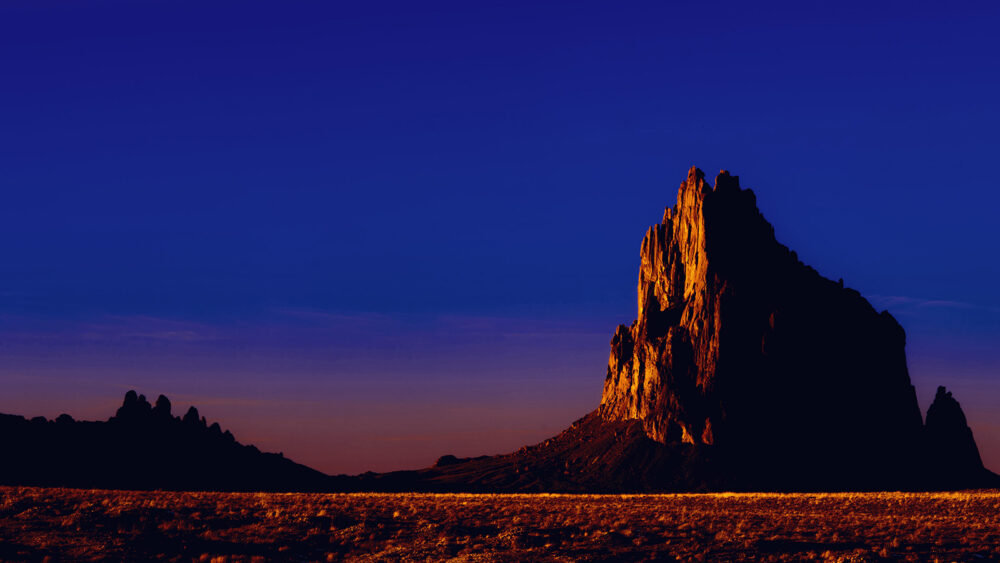
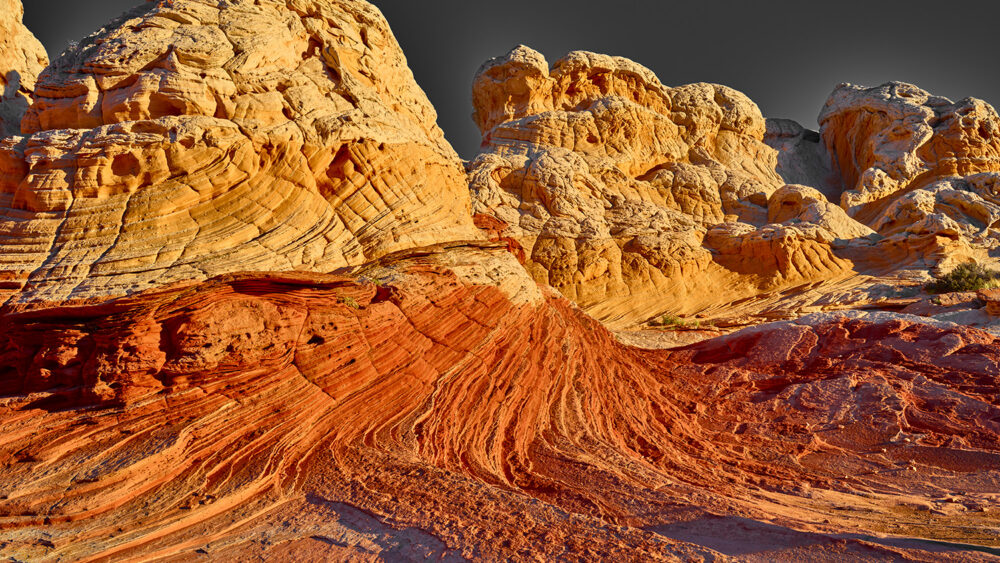
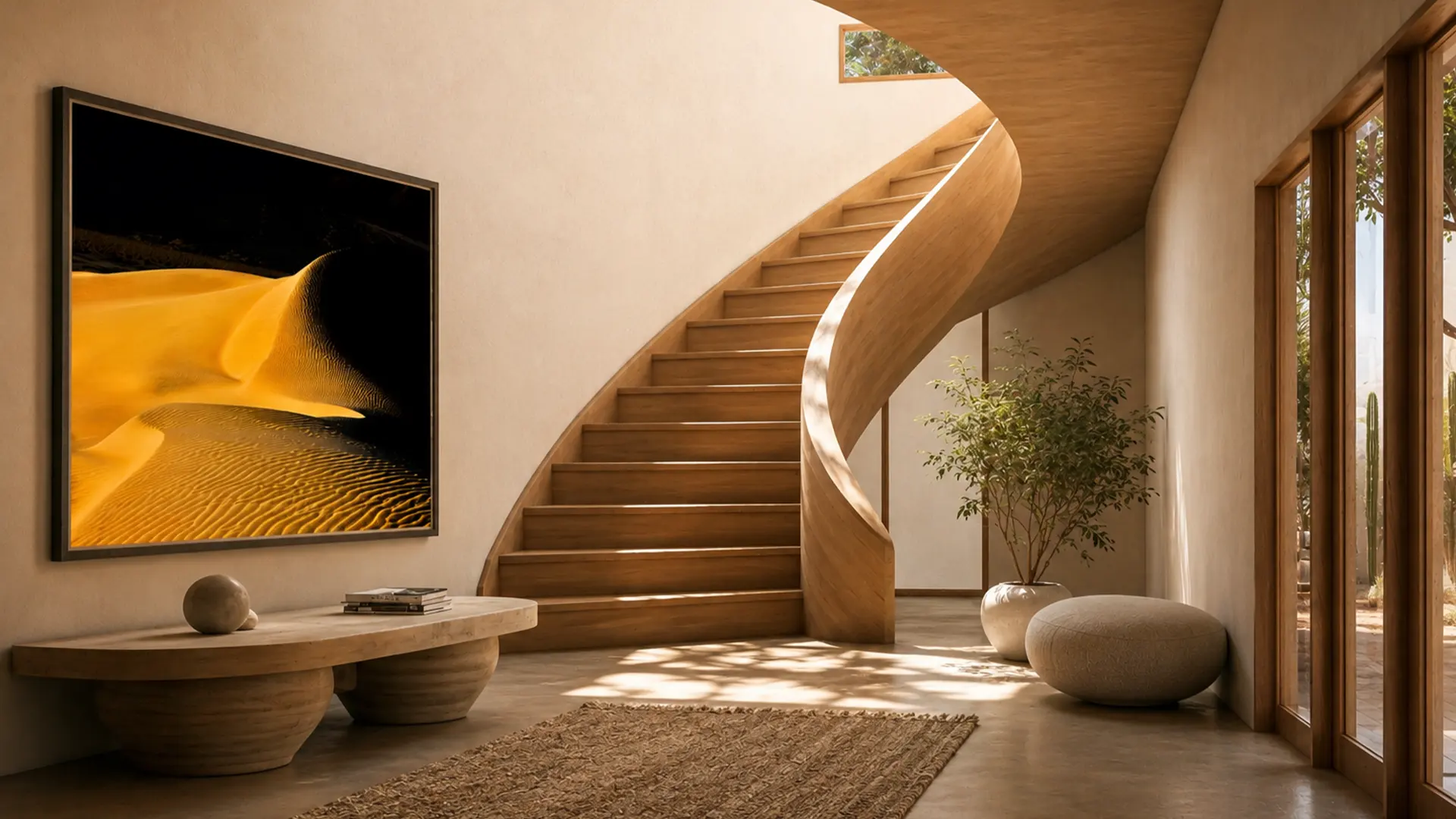
This is the most abstract work in the collection, and it behaves differently in a room than the other pieces. The warm-toned Southwest photographs — Mesa Arch, Sanctum of Light — operate as windows: you look through them into a landscape. Shadowline operates as a surface: you look at it. The line holds the wall. The darkness holds the space. At large scale, it functions closer to a painting or a drawn mark than a photograph.
This quality makes it particularly effective in architectural settings — above long credenzas, in corridors, in spaces where a window-into-landscape would compete with existing views but a graphic abstraction can anchor the room without narrative.
The Location
Eureka Dunes rise nearly 700 feet above the floor of the Eureka Valley in the remote northern reaches of Death Valley National Park — the tallest dune system in California. The field is reached via 45 miles of unpaved road, and the valley receives very few visitors.
The ridge visible in this image is the uppermost crest of the main dune formation, lit by low-angle sidelight at sunrise. Below the lit ridge, the sand face drops steeply into shadow. The visual effect — a bright line floating on black — exists only when the sun is within 20 to 25 degrees of the horizon and the viewer is positioned below the dune on the shadow side. It lasts approximately 1-2 minutes
The Edition
Shadowline is released as a strictly limited edition of 15 prints worldwide, offered in three sizes. Once the 15th print is sold, the image is permanently retired.
Every print is:
• Hand-signed and numbered on the recto by the artist
• Accompanied by a serialized Certificate of Authenticity with dual-hologram provenance
• Personally inspected before leaving the studio
• Registered in the Light & Shadows edition archive
Current edition status: Edition 14 of 15 available.1 sold.
The Capture
System:Hasselblad
Lens:300 mm
Exposure:2,5s/14/50
Date/Time: 02,2020 10-15 minutes after sunrise
GPS Region: Eureka Valley, Inyo County, California
The Print
Produced on Hahnemühle Photo Rag 308gsm — 100% cotton, acid-free, museum-grade — using archival carbon pigments.
The printing challenge in Shadowline is the shadow side. The dark portion of the image must hold texture and depth without collapsing to pure black — the viewer should sense the dune surface even where it isn’t lit. The Hahnemühle cotton rag renders this gradient with a richness that metallic or glossy substrates cannot match, because the paper’s matte surface absorbs light rather than reflecting it, preserving the perception of depth in the shadows.
For buyers who prefer the metallic substrate for its contemporary surface quality, the aluminum dibond face-mount is offered as an alternative. Note that the shadow rendering will shift — becoming more reflective and slightly less deep — which may complement bright, light-filled interiors.
Framing in hand-finished hardwood with museum glass is available on request. The artist recommends blackened ash or matte black for this image, to extend the shadow tonality through the frame.