Use Arrows to explore details
Blade of Light
The Work
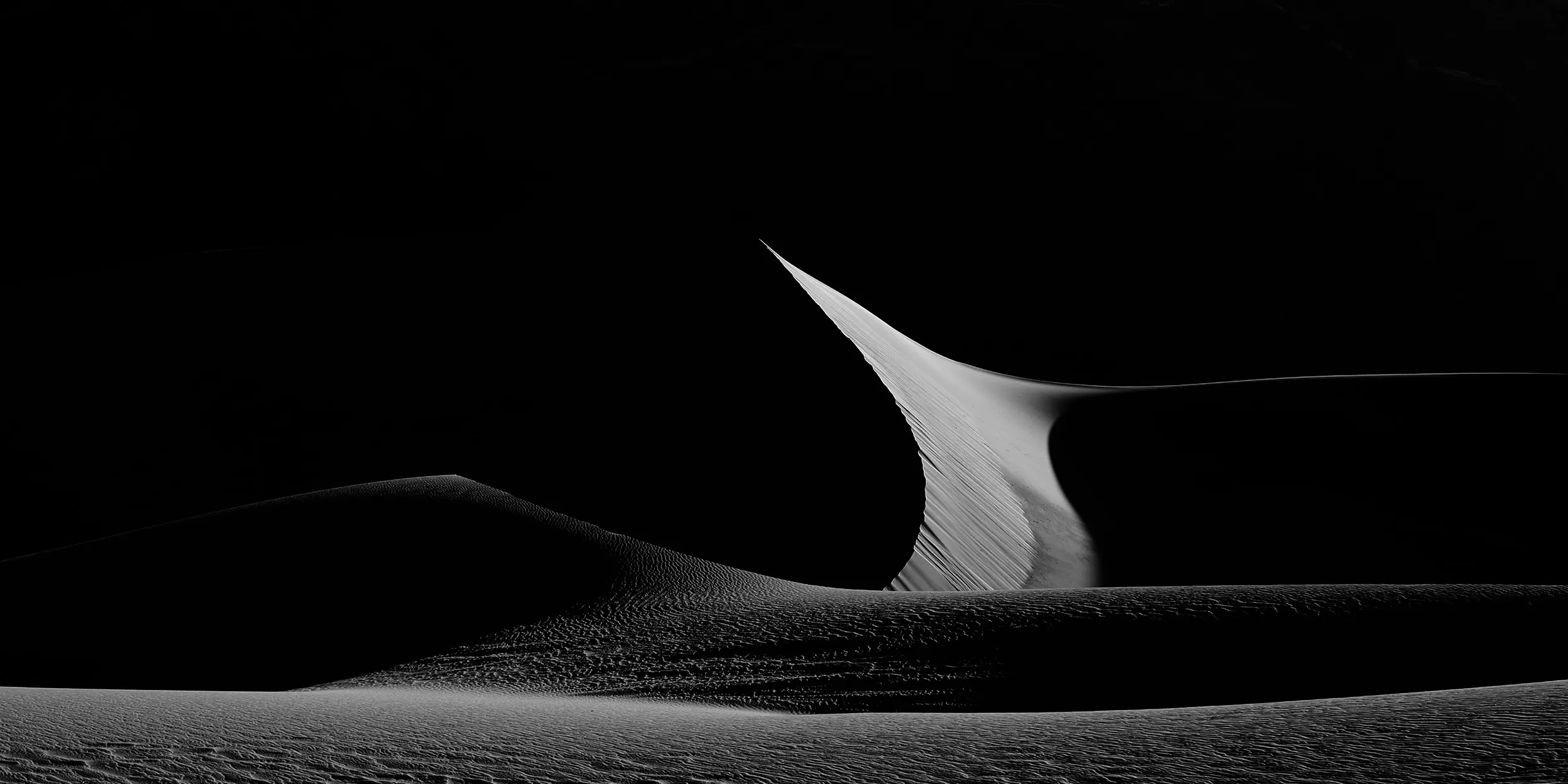
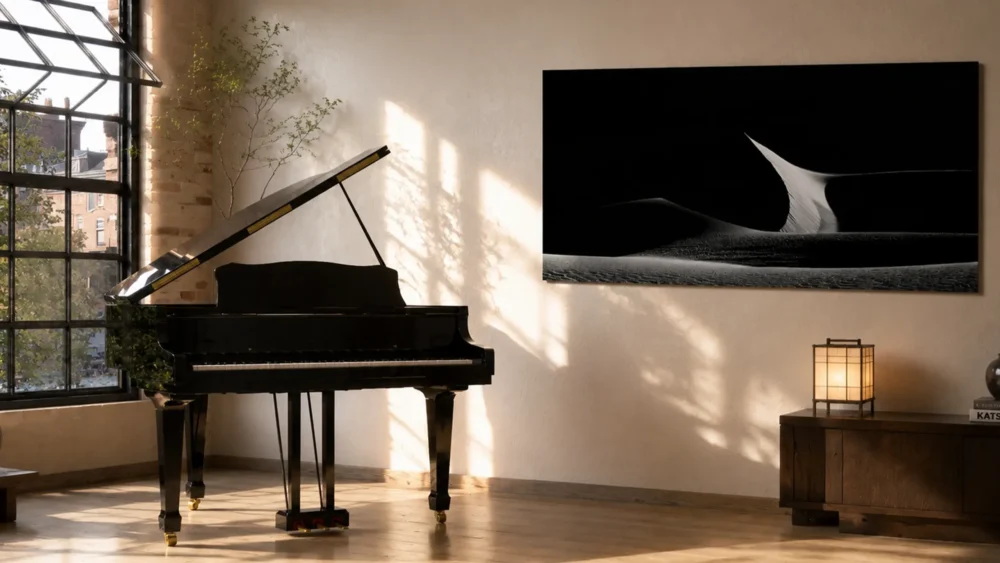
In the vast quiet of Eureka Dunes, the desert can stop feeling like landscape and begin to feel like something cosmic — an object suspended in darkness.
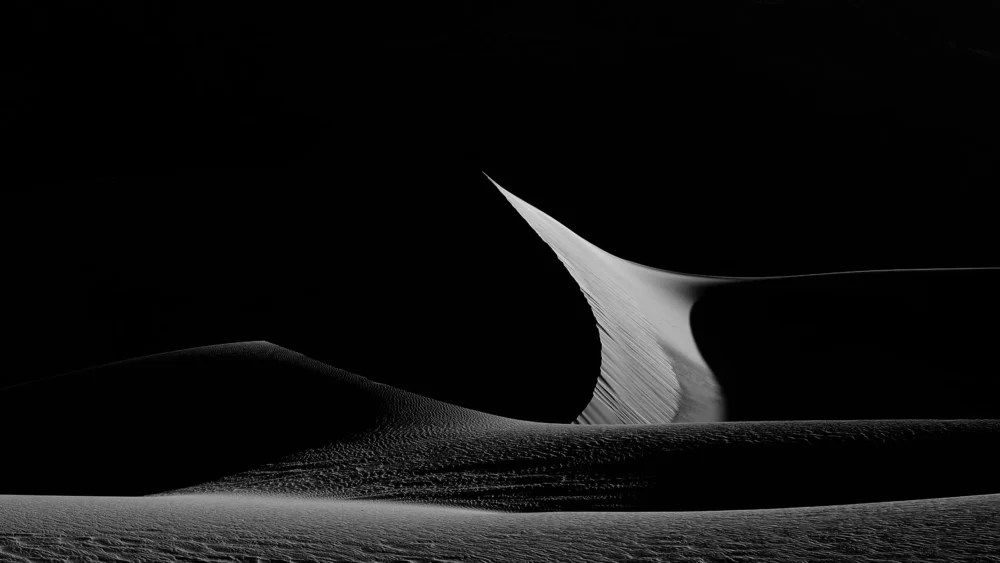
Blade of Light captures that shift. The dune ridge in this image does not sit on the ground. It floats. The shadow below it is so deep and the negative space so complete that the lit form loses its geographic anchor entirely. What remains is something closer to a photograph of a celestial body — a crescent, a ring, a blade of light carving through void.
This is what the dune looked like on 03.1626, approximately 15 minutes after the sun cleared the Inyo Mountains. The light struck the ridge at such a precise angle that the edge appeared sharpened — almost machined. I was standing at 200 foot distance with the fujifilm and the lens 100-200mm, and I made 3 frames before the sun climbed high enough to soften the edge and flood the shadow. That precision lasted 2 minutes. Then the blade dissolved into a dune again.
Of all the Eureka Dunes studies in this collection, Blade of Light is the most otherworldly. Where The Weight of Silence shows you the texture of the sand and Shadowline reduces the dune to a drawn line, Blade of Light removes the dune from Earth entirely. It is the image that visitors most often describe as “not looking like a photograph of a real place.”
It is a real place. It simply doesn’t believe, in that moment, that it is.
The Location
The Edition
The Print
Medium
ARCHIVAL METAL
Architectural-Grade Aluminum
Provenance
HAND SIGNED
Numbered & Signed by the Artist
Logistics
SAFE PASSAGE
Bespoke Archival Crating
Further Explorations
From the Black and White Collection
Related Images