The Work
I was at White Pocket before the sun came over the rim.
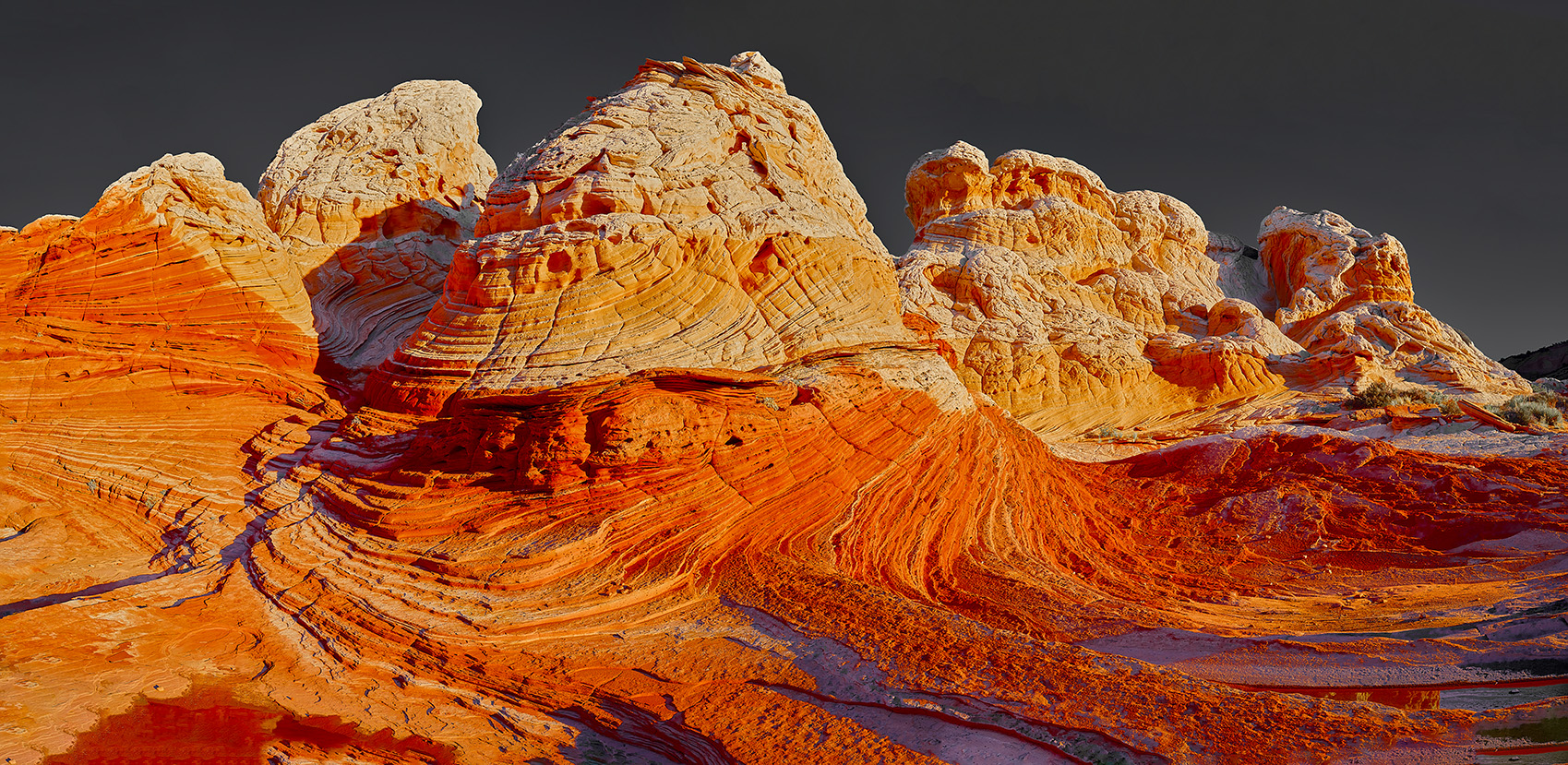
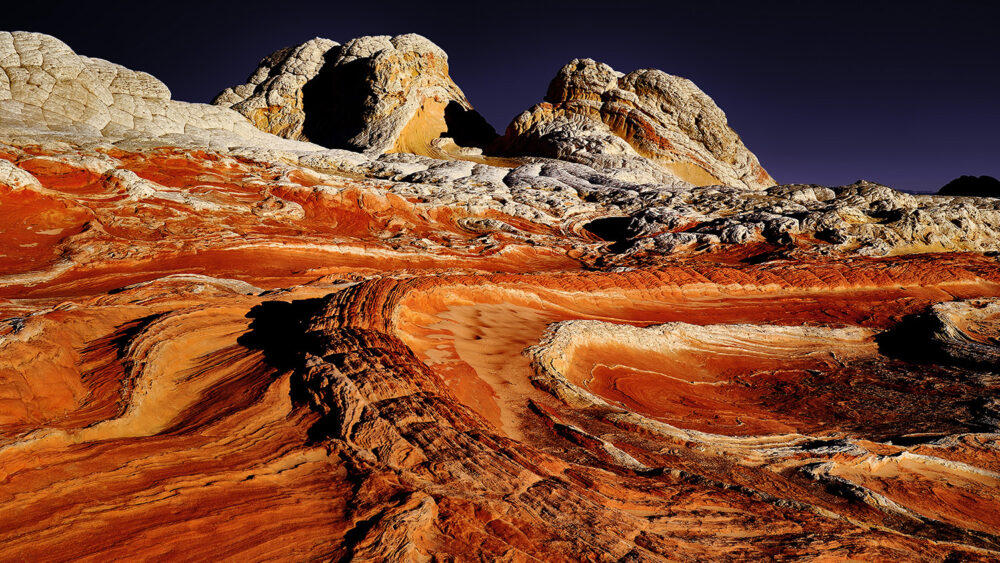
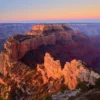
The formation was still in that flat pre-dawn light when I set up — the sandstone looked grey, almost cold. Then the first direct light came through, and the surface changed in about thirty seconds: the iron in the rock responded to the orange wavelengths before anything else, and the ridges went warm before the shadows did. For about ten minutes the contrast was exactly what the panoramic format needed — warm ridges running left to right across the frame, dark shadow valleys between them, and a sky overhead that hadn’t yet committed to blue.
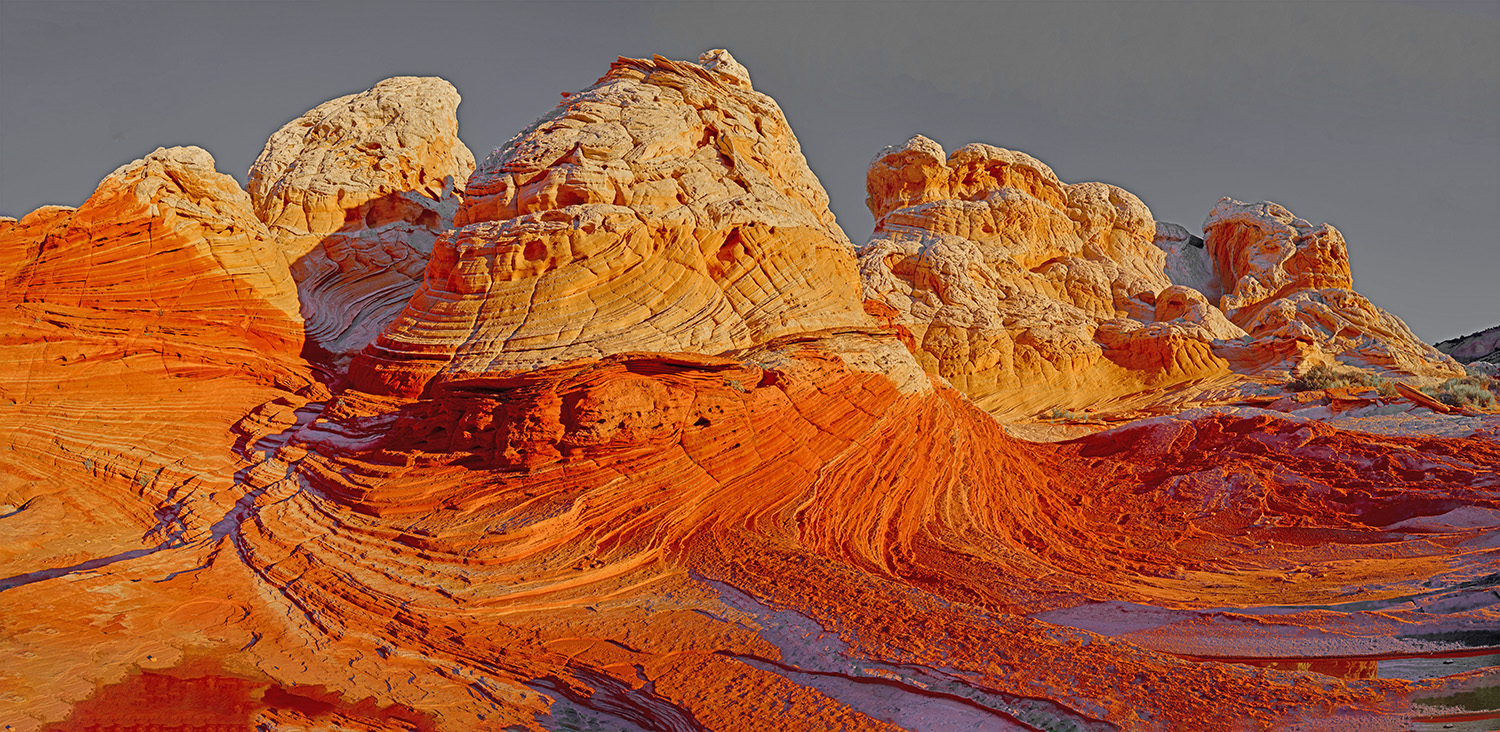
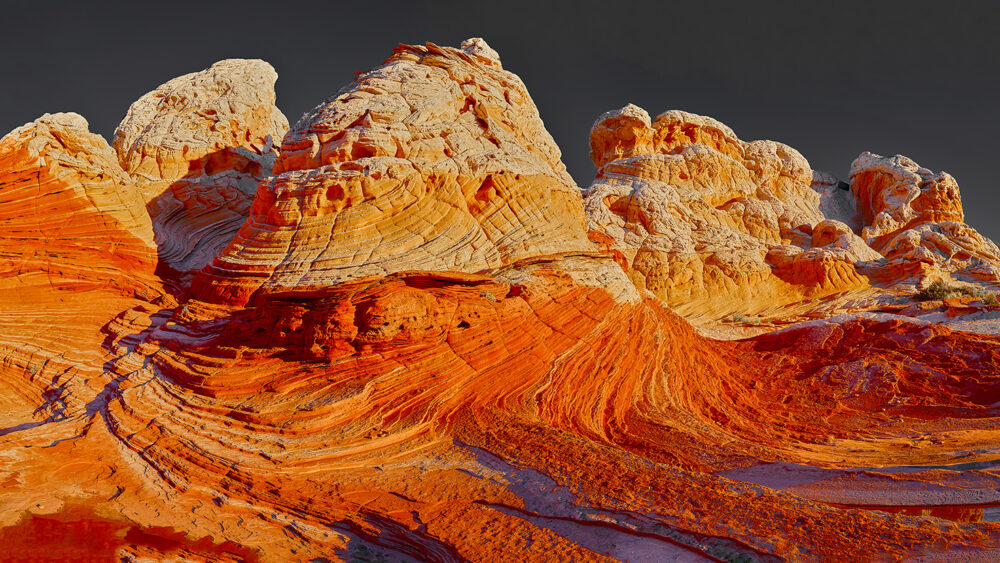
I made this as a stitched panoramic to hold the full sweep of the formation in one image. The individual close studies — the Arch, the abstract surface, the lone tree in the rain basin — each find their own frame at White Pocket. This image is the one that holds the whole place at once.
The Location
White Pocket sits in the western half of Vermilion Cliffs National Monument, on the Arizona–Utah border. The surface is cross-bedded Navajo sandstone — wind-laid Jurassic dunes from roughly 190 million years ago, lithified, exposed, and weathered into the layered swirls visible today. Each line in this image is a record of a specific wind direction on a single ancient afternoon. The fluid quality is not metaphor; the rock holds the form the wind gave it.
Access requires a 4×4 vehicle equipped for deep sand driving, and experience navigating off-trail desert terrain. The road is impassable after rain. The formation is uncrowded by design. This image was made in December 2021, when the low winter sun angle extended the quality-light window to nearly an hour after sunrise.
The Edition
Studio Edition. Edition of 25, hand-signed and numbered. Each acquisition is accompanied by a Certificate of Authenticity with hologram provenance seal. Edition X of 25 available.
The Capture
System: Fujifilm GFX medium format
Lens: 45–100mm
Date / Time: December 2021, early sunrise
GPS Region: White Pocket, Vermilion Cliffs National Monument, Arizona
The Print
A panoramic image printed at 30×60″ presents a wall-covering almost nine square feet of image area. At that scale, the individual ridgelines of the sandstone formation — each one a record of a single Jurassic wind event — are legible as distinct geological events. The GFX multi-frame stitch holds the resolution to support this: no interpolation, no softening, genuine detail across the full width of the print.
Printed on Hahnemühle Photo Rag 308gsm, the warm palette holds its mineral accuracy — the red is iron, the cream is volcanic ash, the gold is the first direct light of a December sunrise. For interior placement: this format demands a long unbroken wall — minimum six feet without interruption. Above a sofa, above a bed on a long wall, or in a hotel corridor, the panoramic format is its own argument for scale.